The Complete Guide to Fishing in Seychelles
An unfiltered, comprehensive breakdown for serious anglers planning to fish one of the Indian Ocean’s most demanding destinations
If you’ve found your way here, you’re likely past the stage of browsing resort brochures and tropical vacation packages, and want a complete guide to fishing in Seychelles. You’ve heard the stories—whispered over beers at boat ramps and shared in hushed tones at tackle shops. Stories about reef edges so sharp they’ll slice through leader in seconds. About giant trevally that fight like they’re personally offended by your existence. About battles that leave anglers questioning their equipment choices, their physical conditioning, and occasionally their life decisions.
Seychelles isn’t where you go for a relaxing fishing vacation. It’s where you go to have your assumptions challenged, your skills tested, and your respect for wild fish permanently recalibrated.
I’ve been fortunate enough to fish across multiple oceans and dozens of countries. Seychelles still occupies a category of its own in my memory—not because it was the easiest or the most comfortable, but because it was the most honest. The fish here haven’t been educated by constant pressure. The reefs haven’t been sanitized by development. The ocean still operates by its own rules, and it doesn’t particularly care about your expectations or your schedule.
This guide exists because I wish something like it had existed before my first trip. Not the glossy marketing materials that promise paradise, but a real conversation about what you’re actually signing up for. The good, the difficult, and the moments that will define your fishing career.
What follows is everything I’ve learned, observed, and sometimes learned the hard way about fishing in Seychelles. No marketing spin. No inflated promises. Just the information you need to show up prepared, fish effectively, and give yourself the best chance at experiencing something genuinely extraordinary. I’ve included a link to charter costs and booking info

Why Seychelles Occupies Its Own Category
Most fishing destinations can be summarized in a sentence. Fly to X for tuna. Head to Y for billfish. Z is where you chase tarpon. Simple. Focused. Predictable.
Seychelles refuses to be simple.
What makes this archipelago genuinely unique isn’t any single species or technique—it’s the intersection of multiple factors that rarely coincide anywhere else on the planet.
Geographic Convergence
Picture this: granite islands rising abruptly from the ocean floor, surrounded by vast coral plateaus that extend for miles before dropping vertically into depths exceeding 2,000 meters. Now add the Indian Ocean’s powerful, nutrient-rich currents flowing through these structures. Stir in minimal commercial fishing pressure across vast areas of reef. The result is a fishery unlike almost anything else accessible to sport anglers.
The bathymetry alone tells a compelling story. Shallow flats transition to reef edges within casting distance. Those same edges plunge into depths where dogtooth tuna ambush prey against vertical walls. Offshore seamounts create current breaks where pelagics congregate. All of this exists within range of well-equipped sport fishing vessels.
Biological Diversity Meeting Raw Power
In most destinations, you target either reef species or pelagics. Shallow water fish or deep water fish. Technical finesse presentations or brute force battles.
Seychelles demands you be prepared for everything simultaneously.
A morning might begin working poppers over shallow coral, targeting giant trevally in water so clear you can watch them decide whether to eat. By midday, you’re jigging 150 meters down for dogtooth tuna that hit like freight trains. Late afternoon could find you casting to tuna boiling on bait schools in open water, or fighting a sailfish that materialized from blue nothingness.
This isn’t theoretical possibility—it’s routine reality for well-planned trips.
Pressure (Or the Lack Thereof)
Here’s something rarely discussed in destination fishing: most premier fisheries are premier despite significant pressure, not because they lack it. The fish have adapted. They’ve learned. They’ve become selective.
Large sections of Seychelles’ fishery remain genuinely unpressured. Not “lightly fished by local standards” but actually wild. Fish that have never seen a lure. Reefs where the residents have never learned to associate boats with danger.
This creates opportunities—but it also creates responsibility. The behaviors you witness, the aggression levels you encounter, the willingness of fish to commit to presentations—these things exist because the fishery hasn’t been exploited. Maintaining that requires conscious effort from every angler who fishes here.
Consequences of Mistakes
The final piece that separates Seychelles from softer destinations: the margin for error is narrow, and the consequences of mistakes are immediate.
A poorly tied knot doesn’t just lose a fish—it ends the fight before it begins against coral edges that test tackle with every run. An underpowered drag setting means a GT reaches structure and freedom. A moment of inattention while jigging can result in a smashed rod as a dogtooth slams the jig on the drop.
This isn’t designed to intimidate. It’s simply the reality of fishing wild, powerful fish in unforgiving structure. The ocean doesn’t curve rules for visiting anglers, and the fish certainly don’t fight any less hard because you traveled a long way to hook them.
Understanding this upfront—truly understanding it—shapes everything from tackle selection to technique to mental preparation.
The Seychelles Archipelago: Understanding the Geography
Before diving into species and techniques, it’s worth understanding the physical landscape you’ll be fishing. The archipelago’s geography directly influences when, where, and how you fish.
The Island Groups
Seychelles consists of 115 islands spanning roughly 1.4 million square kilometers of ocean. For fishing purposes, these divide into two distinct groups:
Inner Islands (Granitic)
These are the islands most visitors know—Mahé, Praslin, La Digue, and several dozen smaller satellites. Formed from granite rather than coral, they create the distinctive Seychelles landscape of massive boulders and lush vegetation.
From a fishing perspective, the inner islands offer:
- Easier logistics and access
- More diverse accommodation options
- Shorter runs to productive water
- Year-round fishing opportunities
- Mix of reef and offshore structure
Most week-long fishing trips base from the inner islands, making daily runs to various reef systems and offshore structure depending on conditions.
Outer Islands (Coral Atolls)
Remote. Isolated. Extreme.
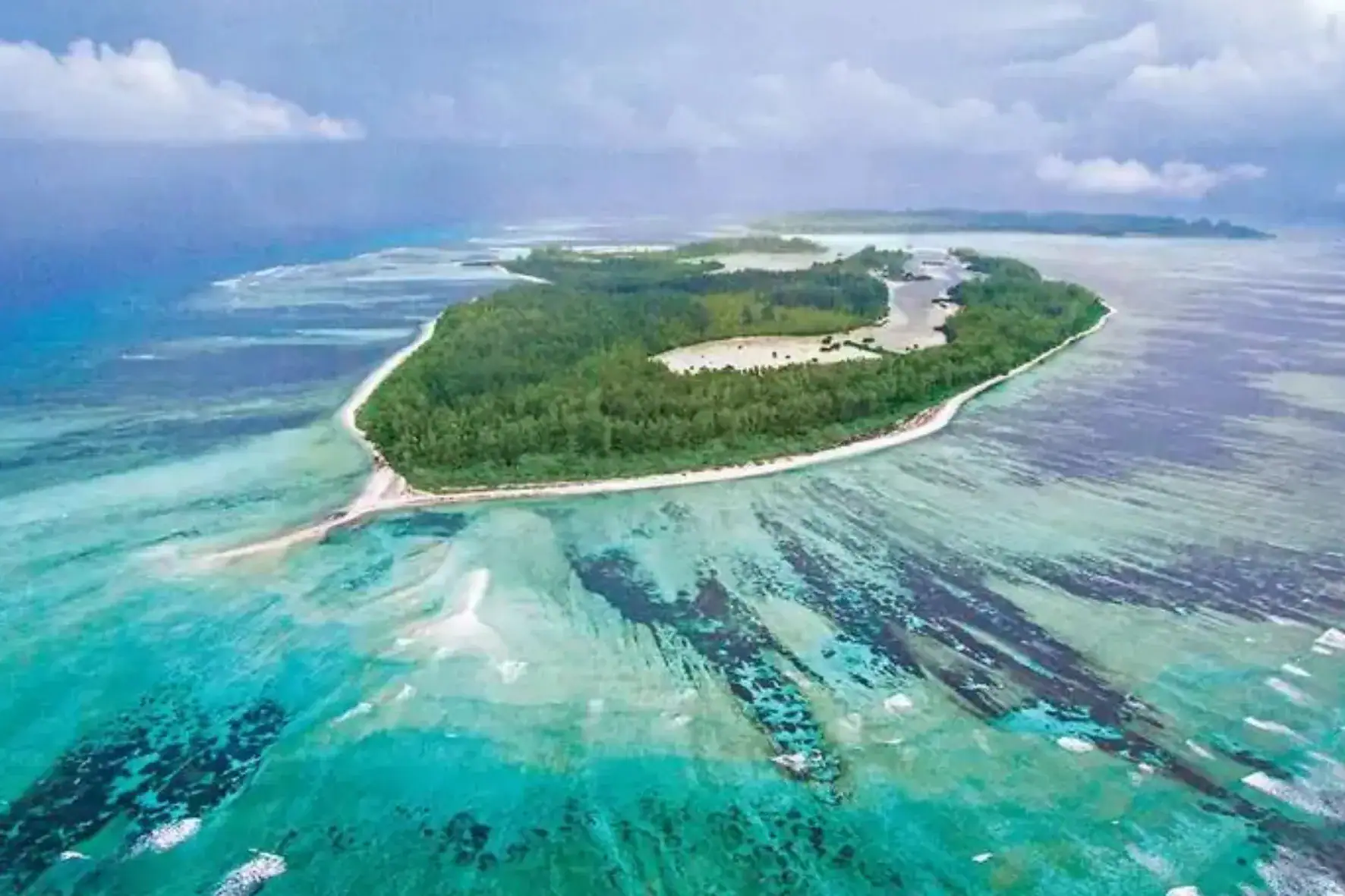
The outer islands—places like Astove, Cosmoledo, and Farquhar—represent expedition fishing in its purest form. These coral atolls feature pristine reef systems, resident populations of predators, and fishing pressure measured in days per year rather than boats per day.
Access requires either liveaboard vessels or expensive fly-in lodge operations. The logistics are complicated. The costs are substantial. The fishing can be absolutely exceptional.
Water Structure Types
Regardless of which islands you fish, you’ll encounter several distinct structure types:
Reef Flats and Edges
Shallow coral plateaus extending from shorelines, often terminating in sharp drop-offs. These edges are highways for predators—current brings baitfish, predators patrol the edges, and anglers intercept them with poppers and stickbaits.
The best edges feature:
- Strong current flow
- Depth changes from 5-10 meters to 40+ meters within a boat length
- Bait presence
- Cover for ambush predators
Vertical Walls and Drop-Offs
Where continental shelves or seamounts create near-vertical underwater cliffs, you’ll find structure-oriented predators like dogtooth tuna. These fish use the walls for ambush hunting, pinning prey against the structure.
Jigging these areas demands precise boat positioning and quick reactions.
Seamounts and Pinnacles
Submerged mountains create current breaks, upwellings, and bait concentrations. Pelagics congregate around these structures, creating opportunities for everything from tuna to billfish.
Finding and fishing seamounts effectively requires local knowledge, quality electronics, and the ability to fish multiple techniques as conditions dictate.
Open Bluewater Corridors
Between structures, deep channels and current lines create highways for migrating pelagics. These areas are less about structure and more about current, temperature breaks, and timing.
Target Species: What You’re Really Hunting
Let’s talk specifics about the fish that bring anglers to Seychelles. Not the exhaustive species list—you can find that anywhere—but the realistic targets and what fishing for them actually entails.
Giant Trevally: The Reason Many Come
If there’s a signature species for Seychelles sportfishing, it’s the giant trevally. Not because they’re the largest fish you’ll catch, but because they represent everything that makes this fishing special: power, aggression, technical challenge, and the absolute necessity of doing everything right.
What Makes Seychelles GTs Different
These aren’t the GTs of pressured fisheries where anglers count themselves lucky to get one to look at a lure. Seychelles GTs—particularly in less-pressured areas—can be genuinely aggressive. They track lures from distance. They compete with each other. They smash poppers with violence that needs to be witnessed to be believed.
But aggressive doesn’t mean easy.
A GT hooked on the edge of a reef immediately tries to reach structure. They don’t run for deep water—they run for the sharpest, roughest bottom they can find. That first run happens in seconds. Your drag is already at maximum, your rod is bent to the cork, and the fish is heading directly for coral that will end the fight instantly.
This is where everything matters:
- Hook penetration from your initial strike
- Knot integrity under maximum pressure
- Drag smoothness at high settings
- Your ability to gain line when momentary opportunities appear
- Guide positioning to keep angles favorable
Size Expectations
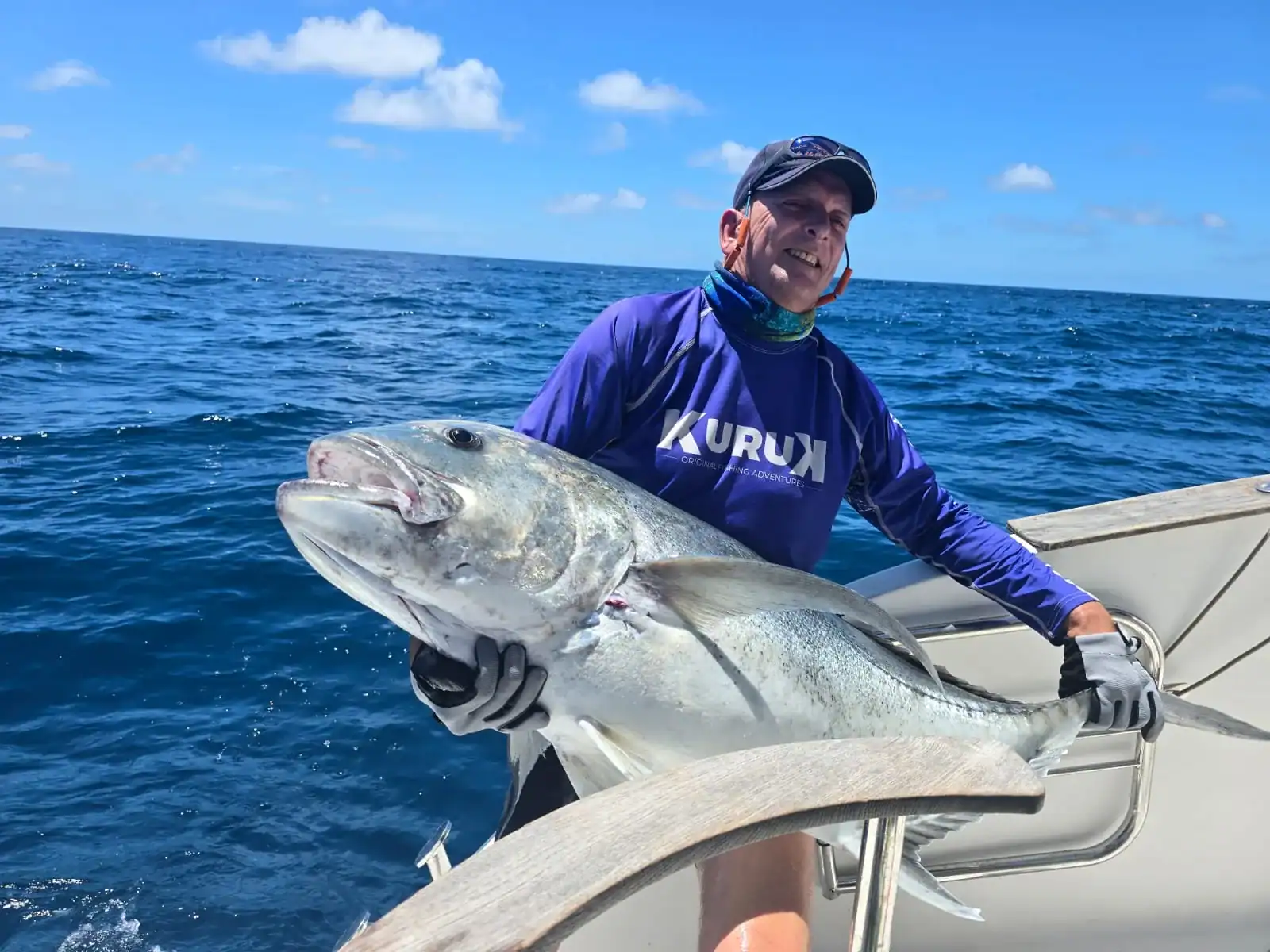
Most hooked GTs in Seychelles range from 15-35 kilograms. These are serious fish that will test tackle rated for species twice their weight.
Larger specimens exist. The 40-50 kilogram class appears with some regularity. True giants exceeding 55 kilograms are rare enough to be exceptional when they’re landed.
Techniques and Locations
GTs patrol reef edges, particularly points where current flows strongest. You’ll fish for them primarily with:
- Heavy poppers (100-200 grams) creating maximum surface disturbance
- Large stickbaits worked with aggressive sweeps
- Occasionally jigs when fish are holding deeper on edges
Prime GT fishing involves long days of casting heavy lures with high-drag-setting strikes. Physical conditioning isn’t optional—it directly impacts your ability to fish effectively as the day progresses.
Dogtooth Tuna: The Deep Specialists
If GTs are the fish everyone talks about before their trip, dogtooth tuna are the fish they talk about after.
These deep-dwelling tuna are possibly the most violent-fighting fish in Seychelles relative to their size. A 20-kilogram dogtooth fights harder than many fish double its weight, and the initial strike on a jig can be shocking even when you’re expecting it.
Why Dogtooth Fishing Is Different
Dogtooth hunt vertically against structure—walls, pinnacles, steep drop-offs. They use the terrain to their advantage, ambushing prey and immediately trying to reach the bottom or run into structure when hooked.
The fight happens in stages:
Initial strike: Often occurs on the drop, and the violence can be surprising. Rods have been shattered by anglers not expecting the impact.
First run: Straight down, full power, testing your drag’s ability to stop a fish that wants the bottom more than you want to stop it.
Mid-fight: A grudging, head-shaking battle where you gain line through technique rather than overwhelming power.
Endgame: Getting color on a fish that still has fight left and the ability to cut you off if given any slack near structure.
Tackle Requirements
This is where many anglers discover their gear isn’t as capable as they thought. Dogtooth fishing requires:
- Jigging rods with serious backbone
- Reels with drags that can sustain 15+ kilograms of pressure without fading
- Heavy braid (PE 6-8 minimum)
- Leaders tough enough to handle abrasion and sharp gill plates
- Jigs that can reach depth quickly in current
Size and Expectations
Typical dogtooth range from 15-30 kilograms. Anything approaching 40 kilograms is exceptional, and fish over 50 kilograms do exist in Seychelles waters.
Unlike some species where larger fish fight less aggressively, big dogtooth fight exactly as hard as smaller ones—they just have more mass behind it.
Yellowfin Tuna: When the Opportunity Appears
Yellowfin presence in Seychelles is more variable than resident reef species. They’re not always around in fishable numbers, but when conditions align—bait concentrations, current patterns, seasonal movements—the fishing can be extraordinary.
The Seychelles Yellowfin Experience
Unlike some destinations where yellowfin fishing follows predictable patterns, Seychelles tuna often require flexibility. You might encounter them:
- Boiling on baitfish in open water
- Holding deep around offshore structure
- Mixed with other pelagics in feeding frenzies
- As incidental catches while jigging for other species
Size varies considerably. School fish of 10-15 kilograms are common when tuna are around. But Seychelles also produces genuine bruisers—fish in the 40-60 kilogram range that fight with the power you’d expect from quality yellowfin anywhere.
Technique Flexibility
The anglers who connect most consistently with Seychelles yellowfin are those prepared to fish multiple techniques:
- Popping and stickbaiting when fish are surface-feeding
- Jigging when they’re holding deeper
- Casting to breaking fish
- Occasionally trolling to locate schools
This requires carrying appropriate tackle for each scenario and being ready to switch techniques as opportunities present themselves.
Wahoo: Speed and Destruction
Wahoo aren’t the primary target for most Seychelles trips, but they’re consistently present enough to be part of the equation—and when they show up, they make their presence known.
What to Expect
Wahoo in these waters typically range from 10-25 kilograms, with larger specimens appearing regularly enough to keep things interesting. They’re most often encountered:
- Along offshore edges and current lines
- Around seamounts and pinnacles
- While trolling between locations
- As surprise visitors when targeting other species
The fight is classic wahoo—a blistering initial run that strips line faster than seems physically possible, followed by shorter, powerful surges interspersed with head shakes that can throw hooks or straighten hardware.
The Teeth Problem
Wahoo teeth are essentially serrated knives. They don’t just cut line—they slice through it effortlessly. This creates the eternal wahoo dilemma: heavy enough leader to survive teeth, but not so heavy it impacts lure action or spooks fish.
Most Seychelles operations use wire or very heavy fluorocarbon leaders when wahoo are likely. It’s a compromise, but losing every fish to bite-offs isn’t a viable alternative.
Sailfish and Marlin: The Blue Bonuses
Seychelles isn’t primarily marketed as a billfish destination, but the reality is that sailfish and marlin are present—sometimes in surprising numbers.
Sailfish appear most consistently during certain seasonal windows, often concentrated around offshore structure and bait schools. They’re typically encountered while targeting tuna or trolling, and most anglers treat them as wonderful bonuses rather than primary targets.
Marlin—both blue and black—show up less predictably but with enough regularity to matter. These encounters are often unexpected, usually while fishing for something else entirely, and they add an element of possibility to every day offshore.
The Supporting Cast: Reef Species That Matter
While most anglers come to Seychelles for the headline species, the reef holds a diverse population of fish that provide variety, action during slower periods, and excellent sport on appropriate tackle:
Jobfish (various species) roam reef edges and drop-offs, offering fantastic light-tackle action and aggressive takes on poppers and jigs.
Groupers in multiple species inhabit reef structure, providing power and stubbornness when hooked.
Snappers school around structure and offer consistent action when targeted specifically.
Barracuda patrol reef edges, occasionally providing explosive surface strikes and powerful runs.
Bohar snapper deserve specific mention—they grow large, fight hard, and inhabit the same edges where you’ll fish for GTs.
These species aren’t afterthoughts. On days when conditions don’t favor major predators, they’re what keeps rods bent. And on light tackle, many of these fish provide genuinely excellent sport.
Seasonal Patterns: Reading Beyond the Calendar
Ask about the “best time” to fish Seychelles and you’ll get different answers depending on who you ask. That’s because there isn’t a universally correct answer—there are tradeoffs, preferences, and variables that matter differently to different anglers.
Here’s what actually influences fishing quality:
Wind Patterns and the Monsoon Cycle
Seychelles experiences two primary monsoon periods:
Northwest Monsoon (November-March): Generally calmer seas, lighter winds, higher humidity. This period often provides better conditions for offshore fishing and reaching remote locations.
Southeast Monsoon (May-September): Stronger winds, rougher seas, slightly cooler temperatures. Some reef edges fish better with wind and current, but offshore range may be limited.
The transition periods between monsoons can be particularly productive, offering moderate conditions and active fish.
Current Flow and Bait Movement
More important than specific months is understanding how current influences fishing:
Strong current sweeping reef edges creates ambush points for predators. Slack current often means slower fishing, regardless of the calendar.
Seasonal current patterns influence bait concentrations, which in turn affect predator presence and feeding activity.
Water Clarity Variables
Seychelles typically offers excellent water clarity, but this varies with:
- Recent weather patterns
- Current direction and strength
- Plankton blooms
- Seasonal variations
Crystal-clear water can make sight-fishing spectacular but may require more precise presentations. Slightly stained water can make predators less selective but harder to locate visually.
Species-Specific Windows
While most target species are present year-round, their behavior and catchability vary:
- GT activity on specific reef systems peaks during certain months
- Yellowfin presence correlates with bait movements and offshore conditions
- Sailfish numbers increase during particular seasonal windows
- Dogtooth remain relatively consistent but feeding patterns shift
The Reality for Trip Planning
Given all these variables, here’s the practical truth: there are excellent fishing opportunities year-round in Seychelles. What changes is which techniques and locations are most productive.
The worst approach is rigidly planning for specific scenarios. The best approach is building flexibility into your trip, working with experienced guides who adapt to current conditions rather than following predetermined plans.
Weather and current do what they want. Fish move based on conditions, not calendars. The anglers who succeed are those who remain adaptable.
Techniques: How Fishing Actually Happens
Seychelles fishing demands commitment to specific techniques. This isn’t a place where casual approaches succeed. Understanding and properly executing core techniques directly determines your success rate.
Popping: The Physical and Technical Challenge
Popping for GTs and other surface predators is the technique most associated with Seychelles fishing—and the one that surprises anglers most with its physical demands.
The Basic Mechanics
You’re using 100-200 gram poppers on heavy casting rods, making long casts to cover water and reach structure. Once the lure lands, you work it aggressively back to the boat: hard rod sweeps that pull the popper underwater, creating the characteristic “pop” sound and bubble trail.
Sounds simple. It isn’t.
The Physical Reality
A full day of popping means:
- 200-400+ casts with heavy lures
- Each cast followed by aggressive retrieves
- High drag settings requiring full power hooksets
- Extended battles with minimal ability to rest
Your forearms burn. Your shoulders fatigue. Your lower back reminds you of every repetition. This is where physical conditioning directly impacts fishing effectiveness—tired anglers make weak hooksets, lose technique precision, and battle fish less effectively.
Technical Elements That Matter
Beyond brute effort, effective popping requires:
Lure selection: Matching popper size and style to conditions and target species. Water clarity, current speed, and fish mood all influence optimal choice.
Retrieve variation: Not every situation calls for maximum aggression. Sometimes a wounded baitfish presentation—longer pauses, subtle movements—triggers follows that pure violence doesn’t.
Strike timing: The explosive visual of a GT detonating on a popper is unforgettable—and the temptation is to strike immediately. Often, waiting an extra beat for the fish to fully commit results in better hook penetration.
Drag management: Starting with drag at near-maximum for the hookset, then immediately adjusting for the fight based on fish size and proximity to structure.
Jigging: Precision in Three Dimensions
While popping gets the glory, jigging accounts for many of the most memorable fish caught in Seychelles—particularly dogtooth tuna.
Vertical Jigging Fundamentals
Unlike casting where lure control is primarily horizontal, jigging is about controlling a lure in deep water while fighting current, managing line angle, and maintaining contact with the jig throughout its movement.
The basic pattern:
- Drop the jig to depth (often 80-150 meters)
- Jerk the rod upward sharply, lifting the jig several meters
- Lower the rod, allowing the jig to flutter down on semi-slack line
- Repeat while maintaining feel for what’s happening below
Strikes often come on the drop. Miss that subtle change in weight, and you miss the fish.
Boat Positioning Criticality
Effective jigging requires the captain to hold precise position over structure while accounting for current. Poor positioning results in:
- Excessive line angle making strikes harder to detect
- Lost jigs on bottom structure
- Ineffective presentations as current sweeps jigs away from target zones
This is where guide experience becomes invaluable.
Tackle Specific Requirements
Jigging rods need backbone to move heavy jigs at depth while retaining sensitivity to feel strikes. Reels need high retrieve ratios to regain line quickly and drags that won’t fade under sustained pressure.
Jig selection matters enormously—weight to reach bottom in current, profile and action to trigger strikes, and durability to survive abuse.
Casting to Pelagics: When Everything Changes
Some of the most memorable fishing in Seychelles happens when you stumble into feeding tuna, wahoo, or sailfish and need to react instantly.
The Chaos Factor
Pelagic feeding frenzies don’t wait for you to get organized. Fish appear, bait scatters, and you have minutes—sometimes seconds—to capitalize before the opportunity disappears.
Success requires:
- Appropriate tackle rigged and ready
- Accurate casting to specific targets
- Quick lure changes when fish show preferences
- The ability to fight fish efficiently while the school remains active
Technique Flexibility
You might need to:
- Bomb long casts to reach working fish
- Make precise presentations to individual feeders
- Switch from poppers to stickbaits to jigs
- Adjust retrieve speeds based on fish responses
The anglers who capitalize on these moments are those prepared for anything.
Trolling: A Tool, Not a Technique
Trolling in Seychelles primarily serves specific purposes:
- Covering water to locate fish
- Transitioning between locations productively
- Searching offshore structure for pelagics
It’s rarely the primary technique for an entire day, but it’s often the method that puts you onto fish that you then target with other approaches.
Tackle: What Actually Works (And What Fails)
Generic tackle recommendations are useless for Seychelles. The specific demands of this fishing require specific gear choices.
Popping Tackle
Rods: 8-10 foot dedicated popping rods rated for 80-100+ pound braid and lures to 200 grams. Cheaper rods fail—either through outright breakage or through flex characteristics that prevent effective hooksets.
Reels: High-quality spinning reels in the 18,000-25,000 size class with proven drag systems. The drag will run at maximum for extended periods—it either handles this or destroys itself.
Line: 80-100 pound braid. Lighter line lacks abrasion resistance for reef fishing. Heavier line creates too much current resistance.
Leaders: 150-200 pound fluorocarbon for GTs, adjusted based on specific conditions and target species.
Lures: Proven poppers and stickbaits from quality manufacturers. This isn’t the place for experimental cheap lures—pack what’s known to work.
Jigging Tackle
Rods: Dedicated jigging rods, typically 5’6″-6’6″, with power ratings appropriate for 200-400 gram jigs and PE 6-8 line.
Reels: Overhead or spinning reels with high retrieval rates and bulletproof drags. Many anglers prefer overheads for pure lifting power.
Line: PE 6-8 braid (roughly 80-100 pound).
Leaders: Heavy fluorocarbon, often 150-200 pounds, short enough to allow direct contact but long enough to provide abrasion protection.
Jigs: Quality jigs in multiple weights and profiles. Budget $30-50 per jig—they’re expensive, and you’ll lose some.
Backup Everything
Here’s what tackle discussions often miss: you need redundant systems for critical items.
- Extra rods for primary techniques
- Backup reels already spooled
- Extensive terminal tackle
- Multiple leader spools
- Lure replacements
Gear failure happens. When you’re fishing remotely with limited ability to source replacements, redundancy isn’t paranoia—it’s prudent planning.
Physical and Mental Preparation: The Unsexy Essentials
Fishing Seychelles successfully requires more than tackle and technique. It demands preparation that extends beyond the tackle shop.
Physical Conditioning Reality
You don’t need to be a professional athlete. You do need honest assessment of physical capabilities and realistic preparation.
Consider:
- Can you make 300+ casts with a heavy rod in tropical heat?
- Can you fight a 30-kilogram fish pulling maximum drag for 20 minutes?
- Can you do this multiple times in a day, day after day?
If any answer is uncertain, addressing it before arrival improves your experience dramatically.
Simple preparation helps:
- Grip strength exercises
- Shoulder and back conditioning
- Core strength work
- Cardiovascular base fitness
Even moderate improvements in conditioning translate directly to better fishing.
Heat and Hydration Management
Tropical heat, high humidity, and constant sun exposure create serious hydration demands. Dehydration leads to:
- Reduced physical performance
- Mental fatigue affecting decision-making
- Increased injury risk
- Diminished enjoyment
Aggressive hydration starts before you feel thirsty and continues throughout the day.
Mental Endurance
Multi-hour battles test mental endurance as much as physical capability. Maintaining technique, making correct decisions under fatigue, and staying focused when tired—these skills matter.
The best mental preparation is simply awareness that it will be demanding and acceptance that difficulty is part of the experience.
Charter Selection: Where Everything Begins
Your choice of charter operation fundamentally determines trip outcome. Cost matters, but it shouldn’t be the primary criterion.
What Defines Quality Operations
Local Knowledge: Understanding seasonal patterns, current effects on specific reefs, where fish concentrate based on conditions. This knowledge develops over years and can’t be substituted.
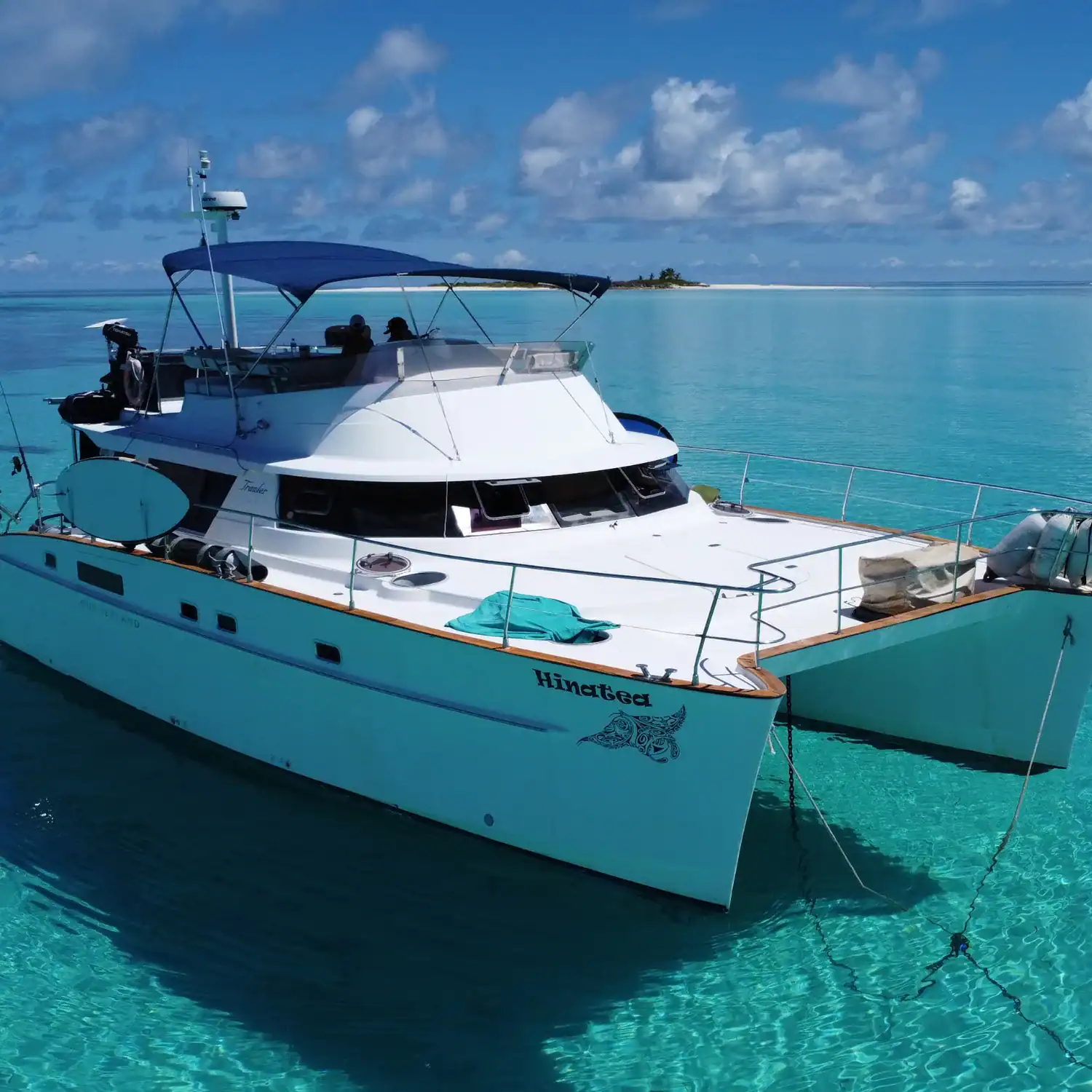
Vessel Quality: Purpose-built boats with proper safety equipment, shade, fighting capabilities, and reliability. The boat is your platform for everything—it needs to be right.
Crew Experience: Professional crews handle boat positioning, assist with fish battles, manage tackle, and make countless small decisions that determine success rates.
Ethical Practices: Proper fish handling, conservation focus, adherence to regulations, and respect for the resource.
Honest Communication: Realistic expectations, transparent pricing, and willingness to adapt to conditions rather than following fixed plans.
Questions to Ask
Before booking, understand:
- Specific boat specifications and safety equipment
- Crew experience and credentials
- Typical fishing plan and flexibility
- Fish handling and release practices
- What’s included versus additional costs
- Cancellation and weather policies
The False Economy
Cheap charters exist. They’re cheap for reasons.
The boat lacks capability. The crew lacks experience. The operation lacks insurance or proper safety equipment. The fishing plan prioritizes economics over effectiveness.
Your investment in Seychelles fishing is substantial—flights, accommodation, time away from obligations. The charter cost is significant but represents the foundation for everything. Optimizing this cost wrong, optimizing it in the wrong direction, destroys the entire investment.
Conservation and Ethics: Your Personal Responsibility
Seychelles’ fishery quality exists because it hasn’t been destroyed by short-term thinking. Maintaining this requires conscious participation from every visiting angler.
Catch and Release Best Practices
Proper Handling: Minimize air exposure, avoid contact with dry surfaces, support fish properly, revive thoroughly before release.
Equipment Choices: Use appropriate tackle that allows landing fish quickly rather than fighting them to exhaustion.
Ethical Decisions: Some fish shouldn’t be targeted in certain situations. Trust your guide’s judgment when they suggest passing on opportunities.
Regulatory Compliance
Seychelles has specific regulations protecting certain species and sizes. These exist for good reasons and apply to everyone, regardless of origin or intentions.
Ignorance isn’t an excuse. Understanding and following regulations is basic responsibility.
Photography Balance
Documenting your trip matters. So does fish welfare.
Quality operators know how to get proper photos while prioritizing fish health. This sometimes means faster photos than you’d prefer. Accept this—the fish’s survival matters more than your Instagram content.
Long-term Thinking
Every action—every fish handled, every decision made—either contributes to or detracts from this fishery’s future.
Choosing operators who prioritize conservation supports the industry moving in the right direction. Demanding ethical practices even when it’s inconvenient sends a message about what matters.
The fishing you experience exists because previous anglers and operators made good choices. Your choices determine what future anglers experience.
Costs and Budget: The Complete Financial Picture
Seychelles fishing isn’t cheap. Understanding the complete cost structure prevents surprises and helps evaluate whether it’s the right investment for you.
Charter Costs
Expect quality operations to charge $2,000-5,000+ per day depending on vessel, crew, location, and whether it’s shared or private charter.
This typically includes:
- Vessel and fuel
- Experienced crew
- Basic tackle (though bringing your own is recommended)
- Safety equipment
Travel and Accommodation
Flights: International flights to Mahé vary significantly based on origin and booking timing. Budget appropriately and book early.
Accommodation: Options range from budget guesthouses to luxury resorts. Proximity to departure points and quality of amenities affect pricing.
Ground transportation: Inter-island transfers, taxi services, and logistics add up.
Additional Expenses
- Fishing licenses (required)
- Terminal tackle and lure replacements
- Tips for crew (customary and appropriate)
- Travel insurance
- Specialized gear if needed
The Value Equation
Evaluating cost requires considering what you’re actually purchasing:
- Access to world-class fishing
- Professional expertise and local knowledge
- Properly equipped vessels
- Safety and reliability
- Memories that last decades
Cheap trips exist elsewhere. Fishing of this caliber exists in limited locations globally.
Trip Planning: Practical Logistics
Successful Seychelles trips require thoughtful planning extending beyond booking flights and charters.
Timing and Duration
Minimum Duration: One week provides reasonable fishing time accounting for travel fatigue and weather contingencies. Shorter trips risk being dominated by travel stress and potential weather issues.
Optimal Duration: 10-14 days allows experiencing different conditions, targeting multiple species, and handling inevitable slow days without feeling pressured.
Booking Timeline
- 12+ months ahead: Optimal for securing preferred dates with top operators during peak seasons
- 6-12 months: Still good availability with quality operations
- Less than 6 months: Limited availability with best operators
Pre-Trip Preparation Checklist
- Confirm all necessary licenses and documentation
- Verify travel insurance covers fishing activities
- Communicate specific interests and preferences with charter operator
- Arrange tackle transport and verify airline policies
- Ensure physical conditioning is appropriate
- Review conservation guidelines and regulations
What to Pack
Beyond standard tropical travel gear:
- Sun protection (clothing, hats, sunscreen, lip protection)
- Polarized sunglasses (bring backups)
- Personal tackle if bringing your own
- First aid supplies
- Seasickness prevention if prone
- Camera equipment with waterproof protection
- Small dry bag for personal items on boat
What Success Actually Looks Like
It’s worth addressing expectations explicitly because disappointment often stems from misaligned expectations rather than poor fishing.
Numbers vs. Quality
Seychelles is not a numbers fishery. You won’t catch 50 fish per day. Some days you might land handful of fish—or even none.
What you will experience is quality and intensity. Every fish hooked matters. Every battle tests your skill and tackle. Every landed fish represents accomplishment.
If you need constant action and bent rods to feel successful, other destinations serve that need better. If you value quality over quantity and appreciate the challenge, Seychelles delivers.
Weather Impact
Ocean fishing depends on weather. Period.
Some days offer perfect conditions. Some days are compromised by wind, current, or visibility. Exceptional operations adapt—finding alternative locations, targeting different species, making the best of conditions.
Days lost entirely to weather are rare but possible. This is why trip duration matters—longer trips absorb weather impacts better.
The Uncertainty Element
Wild fishing in remote locations involves uncertainty. The 50-kilogram GT might show up—or might not. Yellowfin might be thick—or absent. Structure that produced yesterday might be quiet today.
This uncertainty is part of the appeal for many anglers. It’s what separates genuinely wild fishing from controlled, predictable environments.
Embracing uncertainty rather than fighting it improves the experience.
Leave A Comment