The Ultimate Guide to Giant Trevally Flyfishing in the Seychelles
Introduction: The Apex Challenge of Sport Fishing
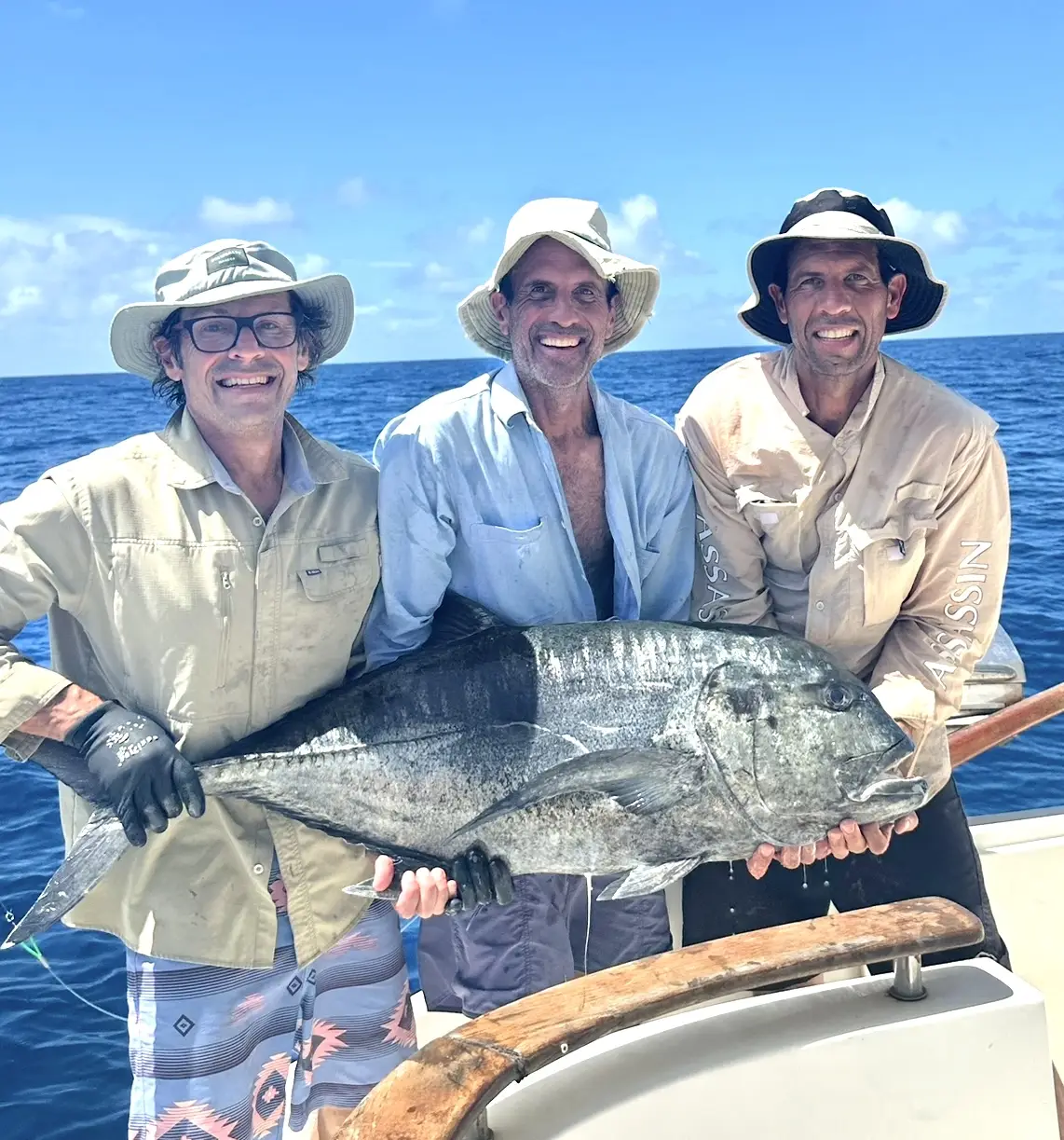
The Giant Trevally (Caranx ignobilis), universally known among anglers as the GT, represents the pinnacle of tropical sport fishing. Dubbed the “gangster of the flats” and the “undisputed thug of the reefs,” this species combines raw explosive power, tactical intelligence, and relentless aggression in ways that have humbled even the most experienced anglers. With maximum recorded weights reaching 80kg (176lbs) and lengths of 170cm (67 inches), the GT is the largest member of the Carangidae family and a fish that can strip hundreds of yards of line in seconds, snap heavy leaders like thread, and destroy improperly rigged tackle with contemptuous ease.
The Seychelles archipelago, comprising 115 islands scattered across a 1.37 million square kilometer Exclusive Economic Zone in the western Indian Ocean, offers some of the world’s premier GT fishing grounds. From the precipitous Mahé drop-off to the remote wilderness of the Amirantes chain and the northern frontier islands of Bird and Denis, these waters provide diverse bathymetric profiles that support thriving GT populations. This comprehensive guide will equip you with the technical knowledge, tactical strategies, and environmental understanding required to successfully target these apex predators.
Understanding Your Adversary: GT Biology and Behavior
Physical Characteristics and Capabilities
The Giant Trevally’s physiology is purpose-built for predation. Its deep, laterally compressed body provides the hydrodynamic profile necessary for sudden directional changes, while its steep head profile and powerful jaw structure allow it to crush prey with devastating force. The species’ tail scutes—sharp, keeled scales along the tail base—facilitate high-torque swimming and explosive bursts of speed reaching up to 37mph.
The GT’s large eyes are adapted for low-light hunting, making them particularly effective predators during dawn, dusk, and overcast conditions. This visual acuity extends to detecting surface disturbances, which explains their remarkable ability to track and strike surface lures from considerable depths.
Dietary Patterns and Prey Selection
Understanding what GTs eat is fundamental to selecting effective lures and fishing locations. The species undergoes significant ontogenetic diet shifts throughout its life cycle. Juveniles inhabit estuaries and shallow bays, feeding primarily on small crustaceans and fish fry. As they mature—typically between three and five years of age—they migrate toward complex reef systems and offshore banks, where their diet expands dramatically.
Adult GTs are opportunistic apex predators that consume virtually anything they can overpower. In Seychelles waters, their primary prey includes fusiliers, bonito, rainbow runners, and various snapper species. However, their menu extends far beyond typical reef fish to include squid, juvenile turtles, and in the most spectacular displays of predatory behavior, even birds.
The famous “bird-eating” behavior observed at Farquhar Atoll, where GTs launch themselves completely out of the water to intercept sooty terns in mid-flight, demonstrates both their explosive power and their reliance on surface-level stimulus. This behavior provides the biological foundation for popping as a technique: the loud splash and acoustic signature of a popper mimics the distress signals of struggling or fleeing prey, triggering the GT’s hardwired predatory response.
Hunting Strategies and Social Behavior
GTs employ both solitary and coordinated hunting strategies. In the Seychelles, they frequently shadow larger predators like sharks and monk seals, positioning themselves to intercept prey flushed from cover by these animals. This “shadowing” behavior means that anglers should look beyond the obvious—the presence of sharks, aggregations of seabirds working the surface, or even unusual water disturbances can all indicate GT activity.
When hunting in schools, GTs often employ coordinated tactics to trap baitfish against structures or the surface, creating feeding frenzies that produce spectacular topwater action. Recognizing these patterns and understanding how GTs position themselves relative to structure, current, and prey is essential for consistent success.
Environmental Mastery: Reading Water, Weather, and Tides
The Tidal Imperative
If there’s one environmental variable that trumps all others in Giant Trevally Flyfishing, it’s tide. The Giant Trevally’s movement patterns, feeding behavior, and positioning are intimately tied to tidal flow. Understanding this relationship transforms random casting into strategic hunting.
The Incoming Tide: The “pushing” or incoming tide is generally considered the optimal window for GT fishing. As water rises, it carries cooler, nutrient-rich ocean water onto the flats and into surf zones, creating a sensory highway that GTs follow. The rising water provides security—the fish know they won’t be stranded—resulting in more aggressive feeding behavior. Baitfish that have sheltered in shallow areas during low tide suddenly become accessible, and GTs move in to capitalize.
The Outgoing Tide: While less universally productive, the falling tide concentrates baitfish as water drains from lagoons and flats. This creates ambush opportunities at channel mouths, reef passes, and other “pinch points” where prey is funneled into confined areas. At locations like St. Joseph Atoll, the outgoing tide forces baitfish from the lagoon through narrow passes, creating feeding opportunities that GTs rarely ignore.
Lunar Phases and Their Impact
The moon’s gravitational influence dictates tidal magnitude, which in turn affects GT behavior. During new and full moon phases, the Seychelles experiences “spring tides”—the most extreme high and low tides of the month. These spring tides move massive volumes of water at higher velocities, allowing GTs to access areas that remain unreachable during the weaker “neap tides” (first and third quarter moon phases).
Many professional guides specifically target new moon periods for an additional reason: in the absence of moonlight, GTs—despite their excellent low-light vision—cannot hunt effectively at night. This results in concentrated, aggressive daytime feeding as the fish compensate for lost nighttime hunting opportunities.
Seasonal Patterns and Optimal Windows
The Seychelles maintains a tropical marine climate with water temperatures ranging from 23°C to 31°C year-round. However, GT metabolic activity and feeding aggression peak within a narrower thermal band of 26°C to 29°C.
The archipelago experiences two distinct wind patterns: the southeast trades (May through September) and the northwest monsoon (November through March). The transitional periods—October through November and March through May—provide the most favorable conditions for popping. During these months, seas are typically calm, water clarity reaches its peak, and the absence of strong winds allows for accurate long-distance casting and precise lure manipulation.
Seasonal Breakdown:
- January-February: Calm conditions with occasional showers; high GT activity
- March-May: Peak season with very calm, clear water; optimal visibility and fish aggression
- June-August: Southeast trades create rough conditions; lowest activity period
- September: Transitional month with improving conditions
- October-November: Peak season returns; calm water and aggressive fish
- December: Northwest monsoon begins; high activity but occasional rough weather
Interestingly, the rain showers common during monsoon transitions can actually improve fishing by cooling surface temperatures and oxygenating the water, which stimulates increased fish activity.
The Amirante Islands
Located 230 kilometers southwest of Mahé, the Amirantes represent some of the most pristine and productive GT waters on Earth. This remote chain of coral islands and atolls sits along the Amirantes Trench, which plunges from 60 meters to over 12,000 meters.
Desroches Island: This unique “underwater atoll” features a reef structure that descends into the abyss, creating complex terrain of tunnels, ravines, and crevices. November through May provides optimal conditions with flat seas and exceptional visibility.
Technique: Drift along the reef edge, casting toward “white water” where waves break over coral. The breaking waves disorient baitfish and create feeding opportunities that GTs exploit aggressively.
St. Joseph Atoll: Thirteen small islands surround a central lagoon with narrow passes that concentrate baitfish during tide changes.
Technique: Position at lagoon passes during falling tides and work flies and poppers in the current as baitfish are funneled toward open water. GTs ambush prey in these bottleneck areas.
Poivre Atoll: Located 13 miles from St. Joseph, Poivre offers extreme trench dynamics where massive GTs patrol the outer reef slopes.
Technique: Alternate between surface popping along the reef edge and deeper retrieves using fast sinking lines along the trench wall. The sheer drop-off creates powerful upwellings that support exceptional marine diversity.
African Bank: This exposed reef system at the northern end of the Amirantes is known for “ultra-aggressive” GTs that are constantly in high-activity mode.
Technique: Use aggressive retrieve patterns with minimal pausing. The fish here respond to fast-moving lures that mimic rapidly fleeing prey.
Bird and Denis Islands: The Northern Frontier
Bird and Denis Islands mark the northern rim of the Seychelles Bank, offering unique access to deep-water predators within minutes of shore.
Denis Island: The legendary “15-minute drop-off” makes Denis a special destination. Deep-water predators patrol just offshore, while the island’s reef flats offer opportunities for sight fishing and fly fishing.
Technique: Work the reef flats during incoming tides for shallow-water sight casting. Move offshore to the drop-off during slack tides for deeper presentations.
Bird Island: One of the few locations in the Seychelles where effective shore fishing for GTs is possible.
Technique: Wade the reef flats during optimal tide windows, casting toward channels and deeper pockets. Bring wading boots for coral protection and practice extreme stealth in the shallow, clear water.
Fly Fishing for Giant Trevally: The Ultimate Technical Challenge
Why Fly Fishing for GTs Is Different
If popping for Giant Trevally is combat fishing, then fly fishing for them is hand-to-hand combat. Fly fishing removes the mechanical advantages of heavy spinning gear—the long, powerful rods, high-capacity reels, and thick shock leaders—and replaces them with a delicate balance of finesse and brute force that seems almost paradoxical. You’re asking a 9-weight fly rod, designed for salmon and small tarpon, to become a 12-weight cannon capable of stopping a freight train.
The challenge is threefold: you must cast large, wind-resistant flies 60-80 feet in often windy conditions; you must execute a hook-set with essentially no stretch in the line system; and you must fight a fish that can run 200+ yards on its initial surge while your backing screams off the reel at terrifying speed. The margin for error is razor-thin. Equipment failure, technique flaws, or tactical mistakes that might be forgiven in conventional fishing become catastrophic in fly fishing.
Yet the reward is unmatched. A GT taken on fly represents one of the pinnacle achievements in all of sport fishing. The visual strike, the immediate connection, and the raw power transmitted directly through the rod create an experience that conventional tackle simply cannot replicate.
Fly Rod Selection: Power Over Presentation
Forget everything you know about traditional fly rod selection. GT fly fishing inverts normal priorities—you’re not selecting a rod for delicate presentation or protecting light tippet. You’re choosing a weapon capable of casting heavy flies into wind and stopping a fish that can pull with 15+ kg of force.
Rod Weight Classification:
- Minimum: 10-weight: Suitable only for smaller GTs (10-20 lbs) in ideal conditions with no wind
- Standard: 12-weight: The industry benchmark for serious GT fishing; handles most situations
- Heavy duty: 13-14-weight: For trophy fish, windy conditions, or situations requiring maximum stopping power
- Extreme: 15-weight: Reserved for specialized situations targeting 50+ lb fish in heavy structure
Rod Length: 9 to 9.5 feet is optimal. Longer rods (10 feet+) provide additional casting leverage but become unwieldy in the confined space of a flats boat and fatigue the angler more quickly during extended fishing days.
Action and Taper: Fast-action rods with powerful butt sections are essential. The rod must load deeply during the cast to generate line speed, yet possess enormous reserve power for fighting. Mid-flex and slow-action rods simply cannot generate the line speed needed for long casts with heavy flies in windy conditions.
Premium GT Fly Rods:
- Scott Sector 12-weight: Industry standard; exceptional blend of casting performance and fighting power
- Sage Salt HD 12-weight: Proven durability and power; favorite among professional guides
- Thomas & Thomas Exocett SS 12-weight: Premium construction with brutal stopping power
- G.Loomis Asquith 12-weight: Fast action for wind-cutting casts
- Echo King 12-weight: Budget-friendly option with surprising performance
Rod Care Considerations: The forces involved in GT fishing can crack ferrules and break rods. Always check ferrule alignment before fighting a fish, and consider rods with reinforced butt sections specifically designed for bluewater species.
Fly Reel Systems: When Drag Is Everything
Your fly reel for GTs is fundamentally different from freshwater or even typical saltwater reels. It must function as a precision brake system capable of applying 10-12 kg of smooth, consistent pressure while a fish strips 200 yards of backing at 30+ mph.
Critical Reel Specifications:
- Drag system: Sealed carbon fiber or cork drag capable of 12+ kg maximum drag
- Drag startup: Minimal inertia—the drag must engage instantly without “sticking”
- Line capacity: Minimum 250 yards of 30-lb backing behind a 12-weight line
- Arbor size: Large arbor design for faster line retrieval and reduced line memory
- Corrosion resistance: Fully sealed against saltwater intrusion
- Retrieve ratio: 1:1 or greater for fast line pickup
Premium GT Fly Reels:
- Abel SDS 11/12: The gold standard; bomb-proof construction with legendary drag
- Hatch Finatic Gen 2 12-Plus: Sealed drag system with incredible stopping power
- Nautilus CCF-X2 12/13: Lighter weight with carbon fiber drag system
- Tibor Gulfstream: Traditional design with proven GT track record
- Ross Evolution LTX: Excellent drag performance at more accessible price point
Backing Specifications: Use 30-lb Dacron or GSP (gel-spun polyethylene) backing. Load 250-300 yards minimum. Many anglers prefer 50-lb backing for the added insurance, though it reduces capacity slightly. Color-coded backing (changes color every 50-100 yards) helps you track how much line a fish has taken.
Fly Lines: Matching Line to Situation
Unlike conventional fly fishing where one line handles most situations, serious GT anglers carry multiple line systems matched to specific conditions and techniques.
Floating Lines – The Standard: Weight-forward (WF) floating lines in 12-weight are the foundation of GT fly fishing. These handle surface and near-surface presentations in water up to 10 feet deep.
Design Features:
- Short, powerful head (30-35 feet) for quick loading and short casts
- Aggressive front taper for turning over large flies
- Tropical coating that remains supple in high heat
- Bright colors (yellow, orange, chartreuse) for tracking the line
Premium Floating Lines:
- Scientific Anglers Titan Taper 12-weight
- Rio GT Line WF12F
- Cortland Tightlines GT 12-weight
- Airflo Tropical Punch GT 12-weight
Intermediate and Sinking Lines: When GTs are holding deeper (10-30 feet) or refusing surface presentations, intermediate and sinking lines become essential.
Intermediate (1-2 inches per second sink rate): Perfect for fishing flies just below the surface or in the top 5 feet of the water column. Excellent in choppy water where floating lines create excessive surface disturbance.
Fast-Sinking (3-6 inches per second): For targeting fish along drop-offs, in channels, or when they’re holding deep during midday heat.
Line Management: Carry at least two complete line systems—a floating line and an intermediate. Serious anglers carry three or four systems on separate reels or spare spools for quick changes.
Leaders and Tippet: The Breaking Point
The leader system for GT fly fishing must accomplish seemingly contradictory goals: it must be heavy enough to withstand abrasion and jaw crushing, yet light enough to allow proper fly presentation. More GTs are lost to leader failure than any other single cause.
Leader Construction – The Progressive Taper: Build leaders 8-10 feet long with a progressive taper that transfers energy efficiently while providing shock absorption.
Standard Formula:
- Butt section (4 feet): 50-60 lb monofilament – connects to fly line
- Mid section (2 feet): 40 lb monofilament – transition zone
- Class tippet (2 feet): 20 lb fluorocarbon – IGFA classification section
- Shock tippet (12-18 inches): 80-100 lb fluorocarbon or wire – abrasion protection
Material Selection:
- Butt/Mid sections: Stiff monofilament (Mason, Ande, or Maxima) for energy transfer
- Class tippet: High-quality fluorocarbon (Seaguar, Rio, or Scientific Anglers)
- Shock tippet: Heavy fluorocarbon (80-100 lb) for standard situations; wire (30-60 lb) if targeting areas with heavy coral or shark activity
The Bimini Twist Connection: The most critical knot in your leader system is the connection between class tippet and shock tippet. The Bimini Twist creates a 100% strength double line in the class tippet, which is then connected to the shock tippet with a Bristol, Slim Beauty, or Albright knot.
Leader Formulas by Situation:
- Clear water/spooky fish: 10-foot leader tapering to 16-20 lb class, 60 lb shock
- Standard conditions: 9-foot leader tapering to 20 lb class, 80-100 lb shock
- Heavy structure/aggressive fish: 8-foot leader tapering to 20 lb class, 100 lb shock or wire
Pre-Made vs. Hand-Tied: While pre-made GT leaders are available from Rio, Scientific Anglers, and others, serious anglers tie custom leaders to match specific conditions. Carry pre-made leaders as backups.
Fly Selection: Size, Profile, and Movement
GT flies must accomplish three objectives: cast reasonably well despite their size, create enough disturbance or flash to attract fish from distance, and trigger an aggressive strike response. Most GT flies are 4-8 inches long and tied on 5/0 to 7/0 hooks.
Popper Flies – Surface Aggression: Hard-bodied or foam poppers create surface disturbance similar to conventional poppers but require significantly more effort to work effectively with a fly rod.
Key Patterns:
- Crease Fly (various colors): Hard-bodied design with cupped face; excellent casting properties
- EP Baitfish Popper: Foam construction for lighter weight; good action
- Gummy Minnow: Soft foam body with realistic profile
- Cam’s Popper: Traditional hard popper scaled for GTs
Colors: Pink, chartreuse/white, black/purple, and natural (tan/white) are most productive
Retrieve: Short, sharp strips with pauses. The fly rod doesn’t provide the mechanical advantage of spinning gear, so the retrieve is more subtle. Focus on creating rhythmic disturbance rather than violent pops.
Baitfish Imitations – Subsurface Presentation: These flies mimic the fusiliers, bonito, and other prey species that comprise the GT’s primary diet.
Key Patterns:
- Enrico’s Rubber Leg Baitfish: Excellent movement and silhouette
- EP Baitfish: Lightweight synthetic construction; easy to cast
- Game Changer: Articulated design creates realistic swimming action
- Clouser Minnow (Jumbo): Classic pattern scaled up for GTs
- Deceiver (Large): Traditional saltwater pattern in 6-8 inch versions
Colors: White/chartreuse, olive/white, blue/silver, and pink/white
Retrieve: Long, fast strips interspersed with pauses. Vary the retrieve—sometimes erratic action triggers strikes from following fish.
Crab Patterns – Flats Specialists: When fishing shallow flats where GTs are cruising for crustaceans, crab patterns can be devastatingly effective.
Key Patterns:
- Merkin Crab: Weighted eyes for quick sink; realistic profile
- EP Crab: Synthetic materials for durability
- Avalon Permit Crab: Originally designed for permit but deadly on GTs
Colors: Tan, olive, and brown for natural bottoms; pink and chartreuse for visibility
Presentation: Cast ahead of cruising fish and let the fly settle to the bottom. Short, subtle strips create puffs of sand that mimic fleeing crabs.
Fly Organization: Carry 15-20 flies minimum, divided among poppers (5-6), baitfish patterns (8-10), and crabs (4-6). Store in saltwater-proof fly boxes with secure closures—flies lost overboard are flies that can’t catch fish.
Casting Techniques: Distance and Accuracy in Wind
GT fly fishing often requires casts of 60-80 feet in wind conditions that range from challenging to impossible. Traditional fly casting techniques must be adapted for these conditions.
The Overhead Cast – Foundation: Begin with a standard overhead cast but with critical modifications:
- Longer stroke: Increase the arc of your cast from the traditional 10-2 to more like 11-1 or even 11-12
- Increased line speed: Accelerate harder through the power stroke
- Tight loops: Focus on narrow loop formation to cut through wind
- Double haul: Essential for generating the line speed needed for distance
The Double Haul – GT Version: The double haul multiplies line speed by pulling on the line with your non-rod hand during both the back cast and forward cast.
Technique:
- Back cast: As the rod loads backward, pull down sharply on the line with your line hand (12-18 inches)
- Drift: As the line extends behind you, allow your line hand to drift back up
- Forward cast: As the rod loads forward, pull down again sharply on the line
- Shoot: Release the line and shoot it through the guides
Practice: The double haul must become automatic. Practice on grass fields or calm water until you can execute it without conscious thought.
Wind Strategies:
- Headwind: Cast with a lower trajectory and increased line speed; consider Belgian cast or oval cast
- Tailwind: Use the wind to your advantage; let the back cast extend farther before starting forward stroke
- Crosswind: Cant the rod to the side to keep the fly away from your body; use reach casts to compensate for drift
The Quick Cast – Sight Fishing Essential: When a GT appears suddenly on the flats, you have seconds to make the presentation. The quick cast eliminates false casting:
- Strip in line until you have 30-40 feet of fly line outside the rod tip
- When the fish appears, make one quick back cast
- Immediately drive forward with maximum power
- Shoot the remaining line to achieve 60-70 foot presentation
Practice this relentlessly—it’s the difference between opportunity and frustration.
The Hook-Set: Power Without Breaking
The fly fishing hook-set for GTs is completely different from conventional popping. You cannot use rod leverage the way you can with spinning gear—the fly rod will break. Instead, you must use a strip-set executed with extreme aggression.
Strip-Set Technique:
- Keep the rod tip low: Point the rod directly at the fish or slightly to the side
- Strip hard: When the fish takes, pull the line with your line hand in one long, violent strip (2-3 feet)
- Repeat: Immediately strip again—multiple strip-sets drive the hook home
- Clear the line: Once the hook is set, bring the rod up smoothly while clearing loose line onto the reel
- Engage the drag: Once the line is on the reel, use rod angle and drag to fight the fish
Common Mistakes:
- Lifting the rod: This is the trout-fishing reflex; it pulls the fly away from the fish
- Hesitation: GTs have crushingly hard mouths; hesitant strip-sets result in poor penetration
- Early rod angle: Bringing the rod up before clearing line creates slack and lost fish
Fighting Strategy: Surviving the First Run
The initial run of a GT on fly tackle is one of sport fishing’s most intense experiences. The fish accelerates instantly from zero to 30+ mph, stripping backing from your reel in a screaming blur. Your backing capacity becomes very real very quickly.
The First 60 Seconds:
- Bow to the fish: If the fish jumps, lower the rod tip (“bow”) to create slack—this prevents the fish from landing on a tight line and breaking off
- Maximum drag: Apply maximum safe drag immediately (10-12 kg)
- Palm the rim: Cup your palm against the reel’s exposed rim to add additional friction beyond the drag
- Turn the head: Use side pressure (rod horizontal, pointing perpendicular to the fish’s direction) to turn the fish away from structure
- Prepare for direction changes: GTs often make sudden 90-degree turns; be ready to redirect pressure instantly
Clearing the Line: The most dangerous moment is clearing loose line onto the reel. Any tangles, loops, or obstructions will cause instant break-off when the fish runs.
Practice: Strip your entire fly line and backing onto the deck, then practice clearing it onto the reel under pressure. Do this until it becomes automatic.
The Extended Fight: Once you’ve survived the initial run and have the fish on the reel, the fight transitions to a battle of angles and pressure.
Techniques:
- Side pressure: Keep the rod low and horizontal; pull perpendicular to the fish’s swimming direction
- Pumping: Lift smoothly (not past 45 degrees), then reel down as you lower the rod
- Follow the fish: Move with the fish if it circles the boat; never let it get directly behind you
- Variable pressure: When the fish rests, increase pressure; when it runs, let the drag do the work
Landing the Fish: As the fish tires, prepare for the landing. Have your guide or partner ready with a net, gaff, or bare hands. Keep constant pressure until the fish is secured.
Sight Fishing on the Flats: The Visual Game
Fly fishing for GTs on shallow flats represents the purest form of the sport—you see the fish, make the cast, watch the strike, and fight the fish in crystal-clear water where every moment is visible.
Reading the Water:
- Nervous water: Subtle surface disturbances indicating fish movement below
- Wakes: V-shaped disturbances from fish swimming near the surface
- Shadows: Dark shapes moving across light sand bottoms
- Tailing: Fish feeding with tails and dorsal fins breaking the surface
Approach and Stealth:
- Minimize movement: Stand still when scanning; GTs detect motion instantly
- Sun position: Position yourself with the sun at your back when possible—this illuminates fish while keeping you in shadow
- Quiet wading: Move slowly through the water; shuffle feet rather than stepping
- Polarized glasses: Essential for cutting glare and seeing fish—amber or copper lenses for low light, gray for bright conditions
The Presentation:
- Identify the fish’s direction and speed
- Lead the fish: Cast 10-15 feet ahead of a cruising fish
- Let it sink: Allow the fly to settle (for crabs and baitfish) or sit on the surface (for poppers)
- Start the retrieve: Begin moving the fly only when the fish is within 5-10 feet
- Maintain speed: Keep the fly moving at a consistent pace; GTs often follow before striking
Reading the Take:
- Aggressive: Fish accelerates and explodes on the fly—set immediately
- Subtle: Fish simply opens its mouth and the fly disappears—set on the visual
- Following: Fish tracks the fly but doesn’t commit—change retrieve speed or direction
Locations and Timing: Where and When
While GTs can be caught on fly throughout the Seychelles, certain locations and conditions favor fly fishing over conventional popping.
Prime Fly Fishing Locations:
- Denis Island flats: Extensive shallow flats perfect for sight fishing during incoming tides
- Bird Island reef flats: Shore-accessible flats with cruising GTs during optimal tide windows
- Desroches lagoon edges: Protected water with good visibility
- St. Joseph passes: Excellent fly fishing during tide changes when fish concentrate
Optimal Conditions:
- Tide: Incoming tide for flats fishing; tide changes for passes and channels
- Wind: Calm to light wind (under 10 mph) for manageable casting
- Light: Early morning and late afternoon provide the best light angles for sight fishing
- Water clarity: Visibility of 15+ feet is ideal; fish become extremely wary in ultra-clear water over 30 feet visibility
- Season: March through May and October through November offer the calmest conditions
Time of Day Strategy:
- Dawn (5:30-7:30 AM): Fish move onto flats with rising tide; excellent sight fishing
- Midday (10:00 AM-2:00 PM): Fish hold deeper; switch to intermediate or sinking lines
- Late afternoon (3:00-6:00 PM): Fish return to flats; prime time for surface presentations
- Overcast days: Extended feeding periods; fish may remain active throughout the day
Common Mistakes and How to Avoid Them
Equipment Failures:
- Insufficient backing: Carry 300 yards minimum; many anglers underestimate backing needs
- Weak knots: Check all knots before every session; retie if there’s any doubt
- Drag not pre-set: Set and test your drag before fishing; don’t wait until you’re fighting a fish
Technique Errors:
- False casting over fish: Every false cast risks spooking the fish; minimize false casts
- Lining the fish: Landing the fly line over or near the fish causes instant flight response
- Over-powering light leaders: Using maximum drag on 16 lb tippet results in break-offs
- Slack line during the fight: Any slack allows the hook to work loose
Tactical Mistakes:
- Casting too close: Leading fish by only 5 feet doesn’t give them time to track the fly
- Wrong fly selection: Using subsurface flies when fish are clearly feeding on the surface
- Fighting the fish too long: Extended fights increase mortality in released fish; land them as quickly as safely possible
Fly Fishing vs. Conventional: When to Choose Each
Both methods have their place in a complete GT fishing arsenal. Understanding when to deploy each maximizes success.
Choose Fly Fishing When:
- Fishing shallow flats (under 6 feet) where sight fishing is possible
- Conditions are calm with minimal wind
- Fish are visibly feeding on or near the surface
- Targeting smaller GTs (under 30 lbs) or mixed species
- The experience and challenge are as important as the catch
Choose Conventional Popping When:
- Fishing deep water (over 15 feet) or the drop-off zones
- Wind conditions exceed 15 mph
- Targeting trophy-sized fish (40+ lbs) in heavy structure
- Covering large areas quickly to locate fish
- Maximum hookup and landing percentages are the priority
The Hybrid Approach: Many successful anglers carry both setups and switch based on conditions encountered during the day. Start with fly gear during calm morning flats fishing, then switch to conventional gear when moving to deeper water or when wind picks up.
Conservation and Ethical Practices
The Case for Catch and Release
Giant Trevally are apex predators that grow slowly and reach sexual maturity relatively late (3-5 years). They’re vulnerable to overfishing pressure, particularly in heavily fished areas. The international sport fishing community in the Seychelles strongly advocates for catch and release practices.
Proper Handling Protocol:
- Fight time: Land the fish as quickly as possible to reduce physiological stress
- Handling: Always use wet hands; never touch fish with dry hands or gloves
- Keep in water: Conduct the release with the fish remaining in the water whenever possible
- Support properly: If lifting for photos, support horizontally with one hand under the belly and one at the tail
- Photo speed: Limit air exposure to 10-15 seconds maximum
- Revive if needed: Hold the fish upright in the current, moving it forward gently to pass water over the gills
- Release when ready: The fish should swim away strongly under its own power
Barbless Hooks: Using barbless hooks or crimping the barbs dramatically reduces release time and tissue damage. Many professional guides require barbless hooks on their boats.
Single Hooks vs. Trebles: Replacing factory treble hooks with heavy single hooks (7/0 to 10/0) improves hook-up ratios, provides better penetration, and makes releases faster and safer for both fish and angler.
Regulatory Compliance
Protected Areas: Marine National Parks, including Ste. Anne and certain zones around Denis Island, prohibit all fishing. Research your destination’s specific regulations before fishing.
Species Protection: All sharks, rays, and marine mammals are protected under Seychelles law. If hooked accidentally, release immediately with minimal handling.
Catch Limits: The Mahé Plateau Trap and Line Fishery Co-management Plan establishes catch limits for certain species to prevent overfishing. Current limits include a maximum of 20 demersal fish per day, with size restrictions for specific species (32cm minimum for red snapper and green jobfish).
Conclusion: The Holistic Approach
Success in Seychelles GT popping requires far more than expensive tackle and raw enthusiasm. It demands environmental literacy—the ability to read tides, interpret lunar phases, and understand how water temperature affects fish metabolism. It requires technical precision in knot tying, lure selection, and retrieve cadence. Most importantly, it demands respect for these apex predators and commitment to their conservation.
Whether you’re working the dramatic depths of the Mahé drop-off, exploring the remote wilderness of the Amirantes, or casting from the northern frontier of Bird and Denis Islands, the core principles remain constant: use properly matched heavy-duty tackle, execute technical casting and retrieve patterns with precision, and prioritize the fish’s wellbeing through ethical catch-and-release practices.
The Giant Trevally has earned its reputation as one of sport fishing’s ultimate challenges. By following the strategies outlined in this guide—from understanding fish behavior and environmental variables to mastering tackle configurations and fighting techniques—you maximize your chances of connecting with these legendary fish while ensuring the Seychelles’ world-class GT fishery remains productive for generations to come.
The gangster of the flats awaits. Are you ready?
