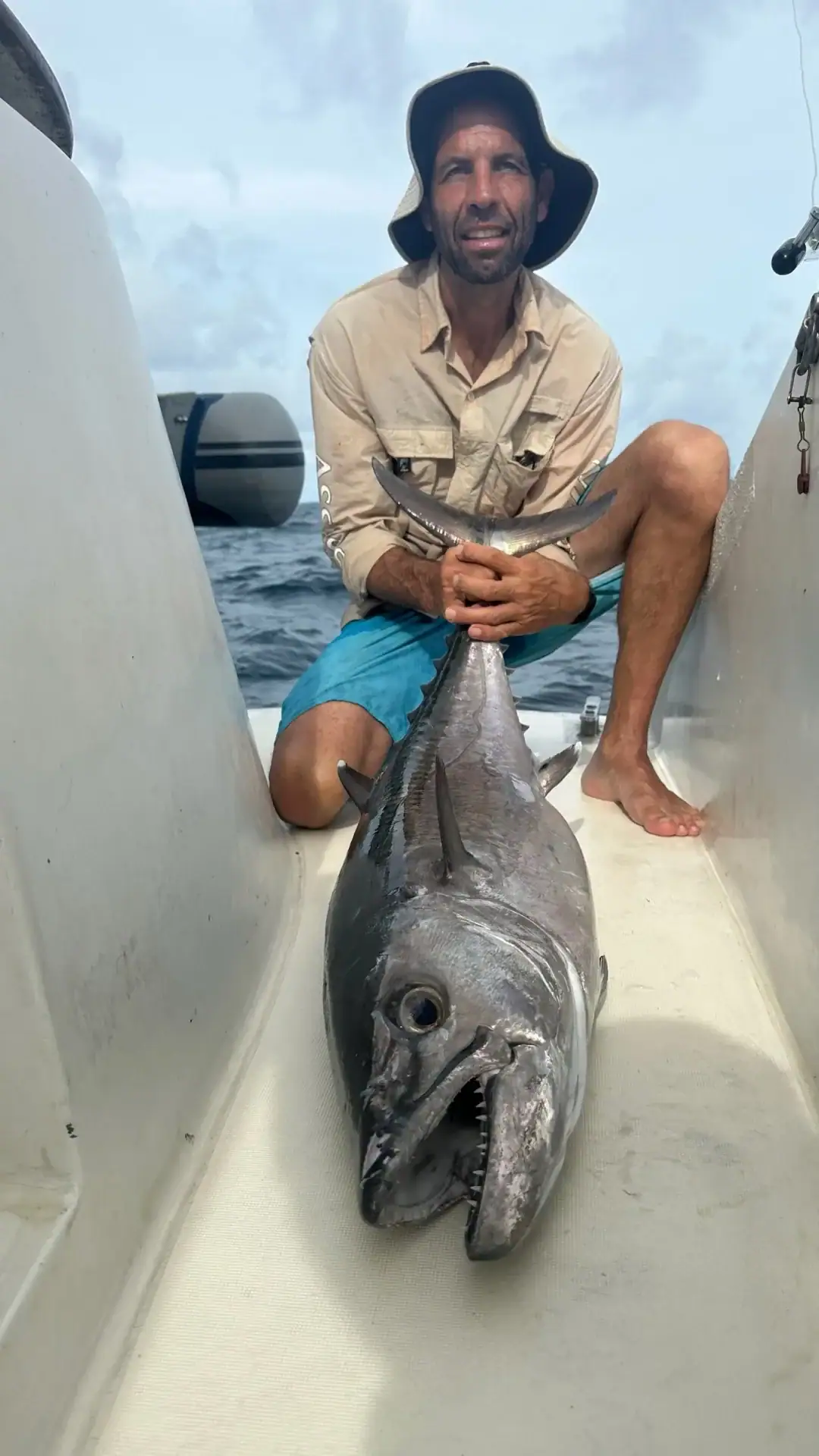
Dogtooth Tuna in Seychelles: The Benchmark for Serious Anglers
If you’ve spent enough time offshore, you already know there’s tuna—and then there are Doggies. In Seychelles, especially across the remote Outer Islands, these fish are the ultimate test of preparation, discipline, and nerve. Anglers who come here to target trophy dogtooth tuna aren’t chasing numbers. They’re chasing moments where everything goes quiet except the drag and your heartbeat.
The reputation didn’t come from marketing. It came from busted gear, lost jigs, and the rare, hard-earned victories that stay with you long after the deck’s been washed down.
Typical Sizes in Seychelles
Dogtooth tuna in Seychelles span a wide range, but even the “small” ones demand respect.
Common: 15–40 kg
These fish already hit harder than most anglers expect and will happily expose weak knots or rushed technique.
Regular Outer Islands fish: 40–70 kg
This is where things get serious. When anglers travel to the Outer Islands to target trophy dogtooth tuna, this is the size class they’re betting on.
Rare giants: 70–100+ kg
Fish of this class are the stuff of dock talk and sleepless nights. Poivre’s famous “Kennels” has produced true legends—fish that don’t just test anglers, but redefine what “prepared” really means.
Techniques That Actually Work
There’s no single magic method, but there are proven approaches that consistently put anglers in the game when they target trophy dogtooth tuna.
Vertical Jigging
Heavy metal, heavy drag, and zero hesitation.
Jigs: 200–400 g, knife and hybrid styles
Tackle: Locked-down drags, reinforced hooks
Dogtooth hit like they mean it—and they do. Give them an inch and they’ll take your jig straight back into the reef.
Deep Popping
This isn’t surface splash-and-pray fishing. Subsurface stickbaits and sinking poppers worked deep along drop-offs trigger violent reactions, especially when Doggies are feeding mid-water.
Drifting Live or Cut Bait
When conditions allow, this old-school approach still accounts for some of the biggest fish. Patience matters. So does positioning.
Trolling
Deep divers over ledges and pressure points are deadly when currents line up. It’s not glamorous, but when anglers target trophy dogtooth tuna, efficiency counts.
Seasonality: Timing Your Shot
Seychelles offers Dogtooth opportunities year-round, but there are windows when everything aligns.
Year-round presence across the Outer Islands
Strongest period: November–May, when currents stabilize and bait stacks predictably
Prime feeding windows: Dawn and dusk
The biggest Doggies often move with intent during low light. If you’re serious about when to target trophy dogtooth tuna, set your alarms early and fish until the sun disappears.
Why the Outer Islands Are Special
Dogtooth tuna thrive where pressure is low and structure is unforgiving. The Outer Islands deliver both in abundance. Steep reef walls, sudden drop-offs, and ripping currents create perfect ambush zones.
Places like African Banks aren’t just productive—they’re ruthless. It’s exactly why anglers travel halfway across the world to target trophy dogtooth tuna here instead of anywhere else.
Example Catches That Set the Standard
Across multiple seasons, Seychelles has quietly built one of the most consistent Dogtooth records on the planet.
Multiple fish over 50–60 kg landed at Poivre, many on vertical jigs in heavy current
70+ kg Doggies hooked—and lost—on African Banks jigging sessions, often straight into reef before anglers could turn their heads
Every one of these encounters reinforces the same lesson: when you target trophy dogtooth tuna, winning is never guaranteed—but that’s exactly the point.
Final Thoughts from the Deck
Dogtooth tuna are not a species you “figure out” once. They demand respect every single drop. The anglers who succeed are the ones who show up prepared, fish with intent, and accept the losses as part of the price.
If you’re ready to target trophy dogtooth tuna in one of the last true frontiers of big-game fishing, the Seychelles Outer Islands are where stories stop being theoretical and start being personal.