What to Bring, What to Skip, and How to Handle Fish Properly Offshore
Fishing the Seychelles Outer Islands is not a normal tackle-box exercise. The combination of distance, current, fish size, and isolation means preparation matters more here than almost anywhere else in the Indian Ocean.
This guide is written for anglers heading to places like the Amirantes, African Banks, Poivre, St Joseph, and Desroches—where gear failure isn’t an inconvenience, it’s the end of an opportunity.
This is not a shopping list. It’s a field-tested system for arriving prepared, fishing efficiently, and releasing fish in strong condition.
1. Rods & Reels: Build for Control, Not Comfort
Popping & Stickbait Setups
-
PE rating: PE6–PE10
-
Rod length: 7’6”–8’2” (casting distance matters)
-
Reels: 14000–20000 size, high drag, sealed
Why:
Outer Islands GTs don’t give second chances. You’re fishing near reef, whitewater, and structure. Control in the first 10 seconds decides the outcome.
Tip:
Bring two popping outfits minimum. Even the best reels can fail after repeated salt exposure and long fights.
Jigging Setups
-
PE rating: PE4–PE10
-
Rod style: Shorter, parabolic action for lift
-
Reels: High-torque spinning or overhead
Why:
Dogtooth Tuna, Amberjack, and deep reef fish hit hard and dive immediately. Torque matters more than speed.
2. Lines, Leaders & Terminal Tackle (Where Most Trips Fail)
Main Line
-
PE6–8: For most popping and jigging
-
PE10: Dedicated GT or Dogtooth setups
Bring at least two spare spools or bulk braid. Abrasion, wind knots, and cut-offs are guaranteed.
Leaders (Do Not Underestimate This)
-
GTs: 170–200 lb fluorocarbon or mono
-
Dogtooth / Yellowfin: 200–250 lb
-
Wahoo: Heavy fluoro or wire depending on conditions
Field reality:
If you think you’ve brought enough leader, you haven’t.
Hooks & Hardware (Bring Double What You Expect)
-
Trebles: 5/0–7/0
-
Singles: 7/0–11/0 (inline preferred for release)
-
Split rings: 200–300 lb
-
Assist hooks: Multiple sizes, pre-rigged
Dogtooth Tuna destroy assist hooks. GTs open split rings. This is normal.
3. Lures That Actually Work Offshore
Poppers
-
120–200 g
-
Large cups for whitewater
-
Natural and dark colours for clear water
Stickbaits
-
Floating and sinking
-
120–200 g
-
Slim profiles for pressured or finicky fish
Jigs
-
200–500 g (you will use heavier than expected)
-
Long and semi-long profiles
-
Bring duplicates—losses are common
4. Tools You’ll Use Every Day
These are not optional:
-
Heavy-duty split ring pliers
-
Long-nose pliers
-
Hook cutters (essential for safe releases)
-
Gloves (leadering fish barehanded offshore is a mistake)
Cheap tools fail fast. Bring quality.
5. Personal Gear That Saves Trips
-
UPF clothing (long sleeve, hooded)
-
Buffs, hats, polarized sunglasses
-
Sunscreen (reef-safe if possible)
-
Motion sickness meds (even experienced anglers get caught out)
Sun exposure ends more trips than bad weather.
6. Fish Handling & Catch-and-Release Best Practices
Outer Islands fisheries remain exceptional because fish are released well.
General Rules
-
Use heavy enough tackle to shorten fights
-
Avoid dragging fish across decks
-
Support the belly on large fish
-
Keep air exposure minimal
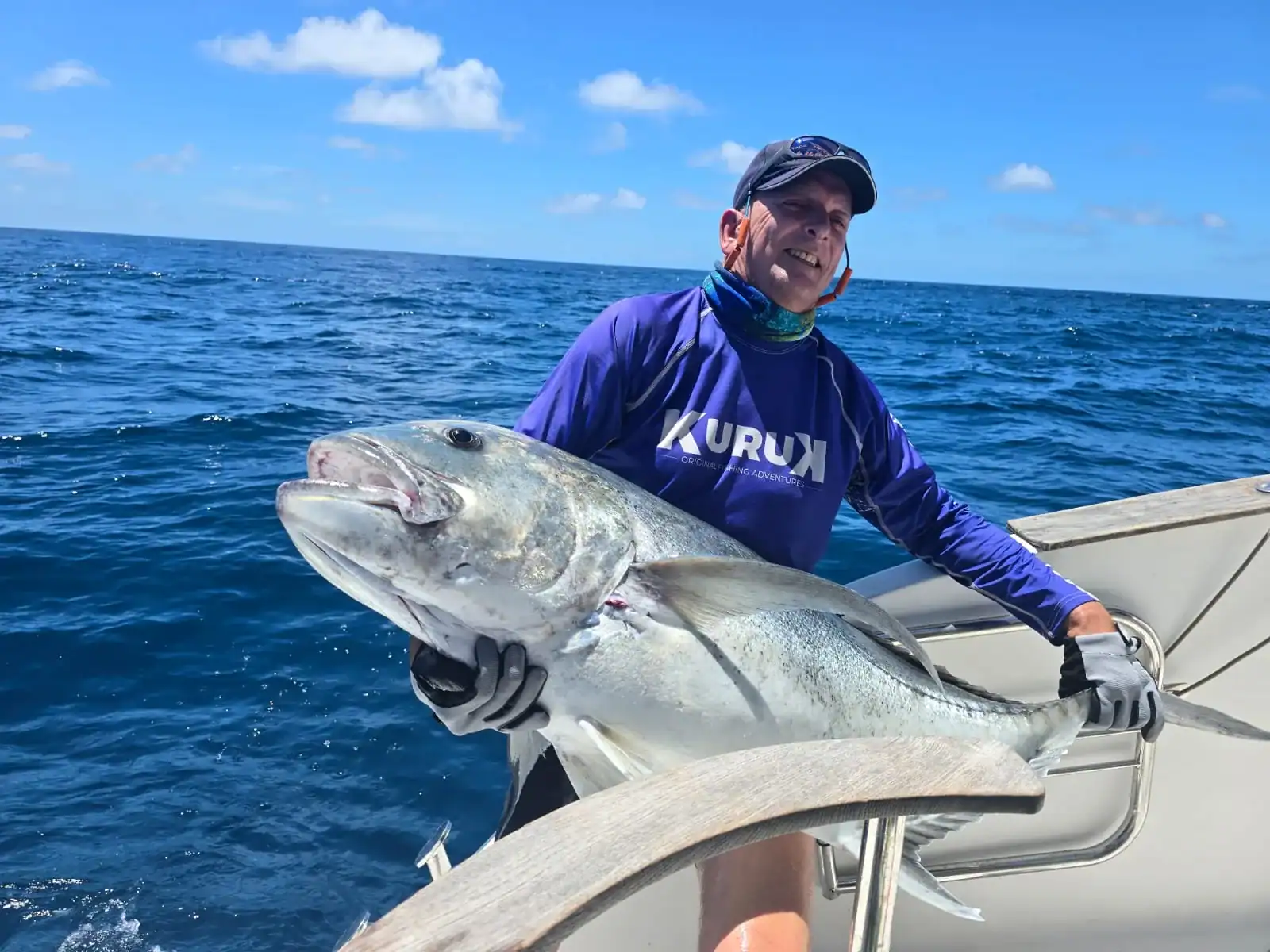
GTs & Large Trevally
-
Boat-side releases when possible
-
Quick photos, no hero poses
-
Revive facing current until fish kicks strongly
Tuna & Pelagics
-
Avoid tail-lifting heavy fish unsupported
-
Remove hooks quickly
-
Let fish swim off under power, not drift
Deepwater Reef Fish
-
Be aware of barotrauma
-
Vent responsibly if releasing
-
Minimise time out of water
Final Thought: Preparation Is Respect
Good gear isn’t about landing more fish—it’s about doing the job cleanly. When you arrive prepared, you fish better, handle fish better, and leave the place as wild as you found it.
That’s the Outer Islands ethic.

Leave A Comment