
Captain’s Log: Northwest Monsoon Resistance — 6 Days on the Mahé Plateau
Mahé Plateau Fishing Report | Late February 2026 Ground Truth
Trip Details
-
Trip Type: Mahé Plateau & Drop-Off Technical Expedition
-
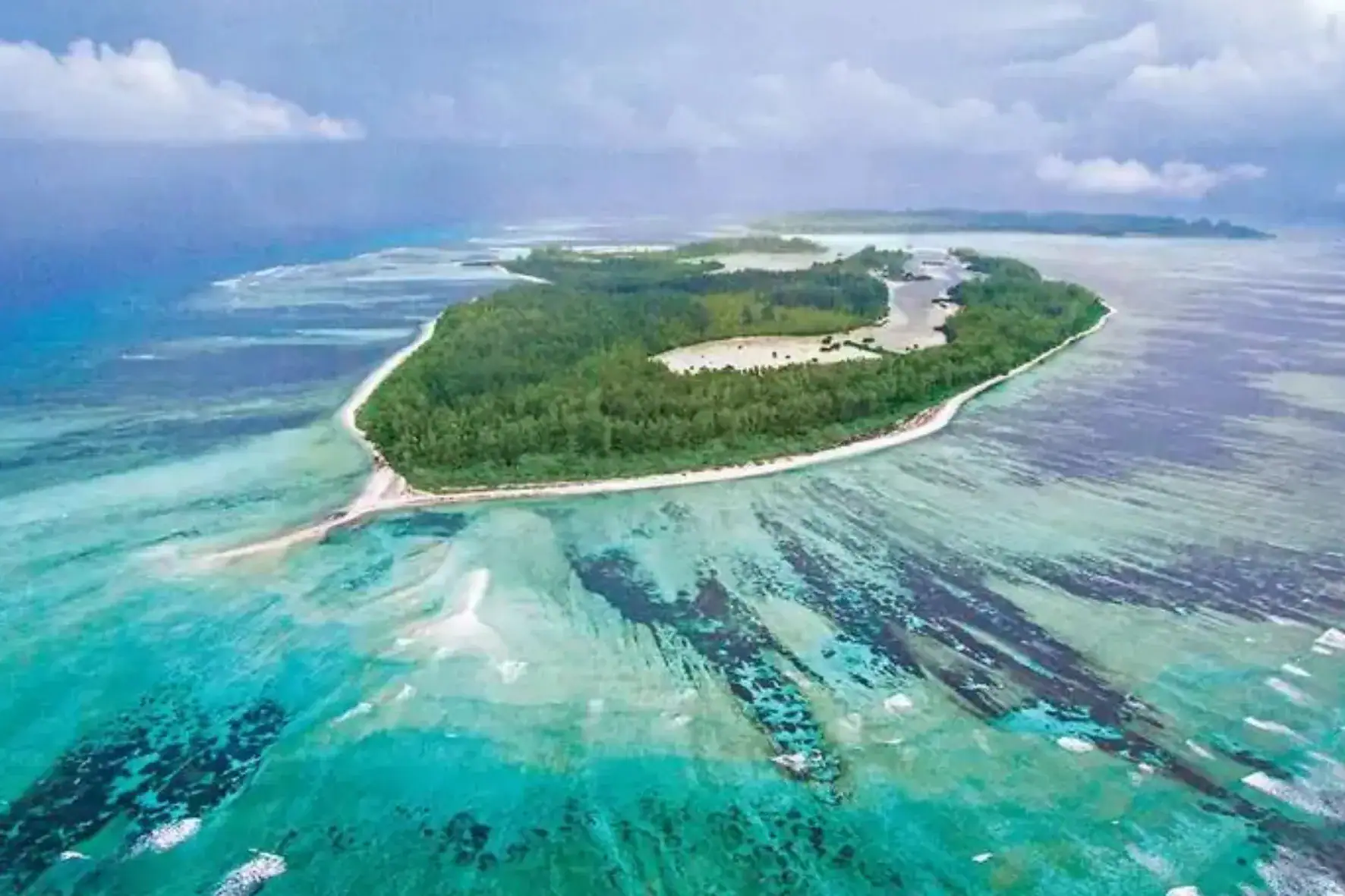
Region: Mahé Plateau (North Bank to the Eastern Drop-off)
-
Date Range: 23–28 February 2026
-
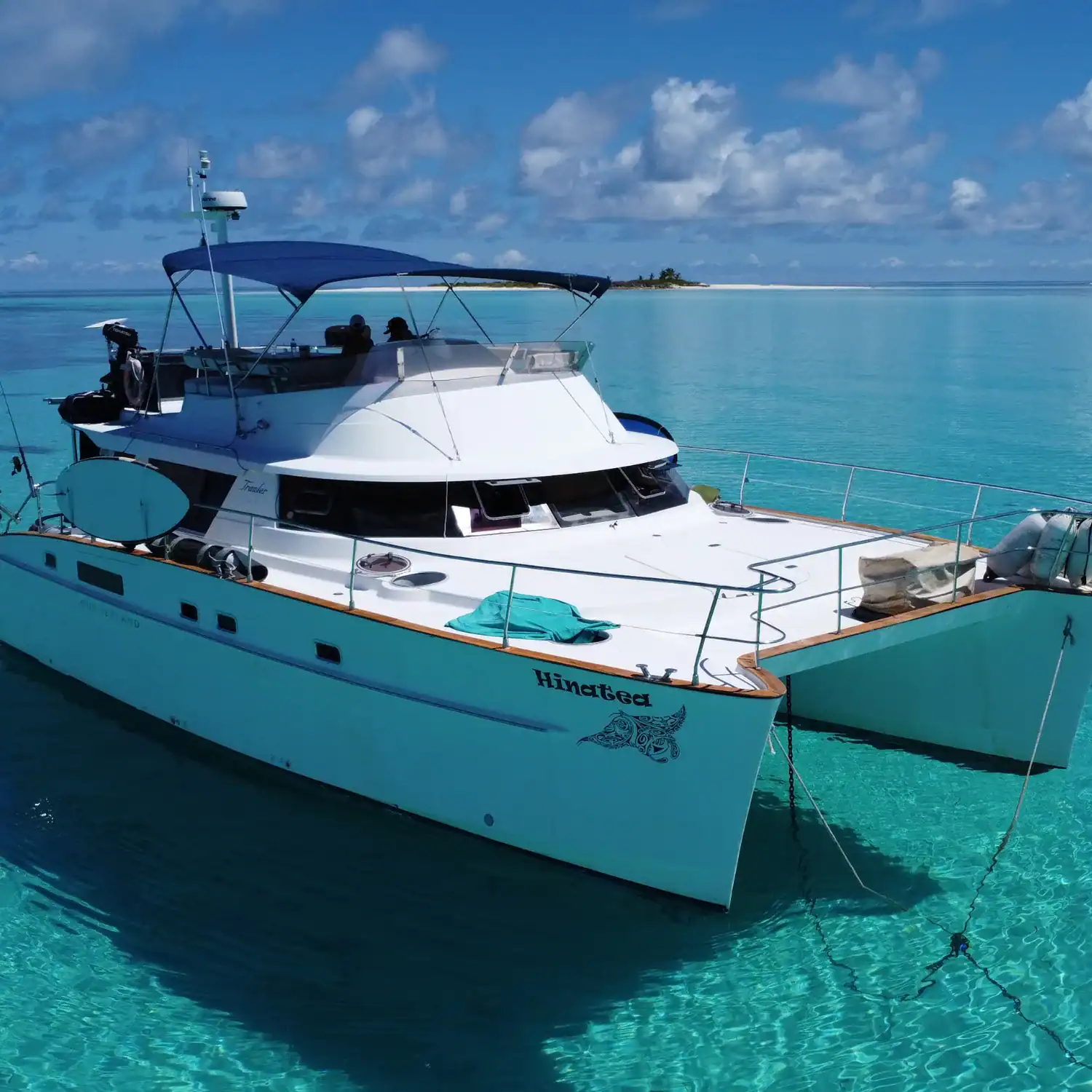
Duration: 6-Day Liveaboard (Vessel: Hinatea)
February rain regulated the water temperature

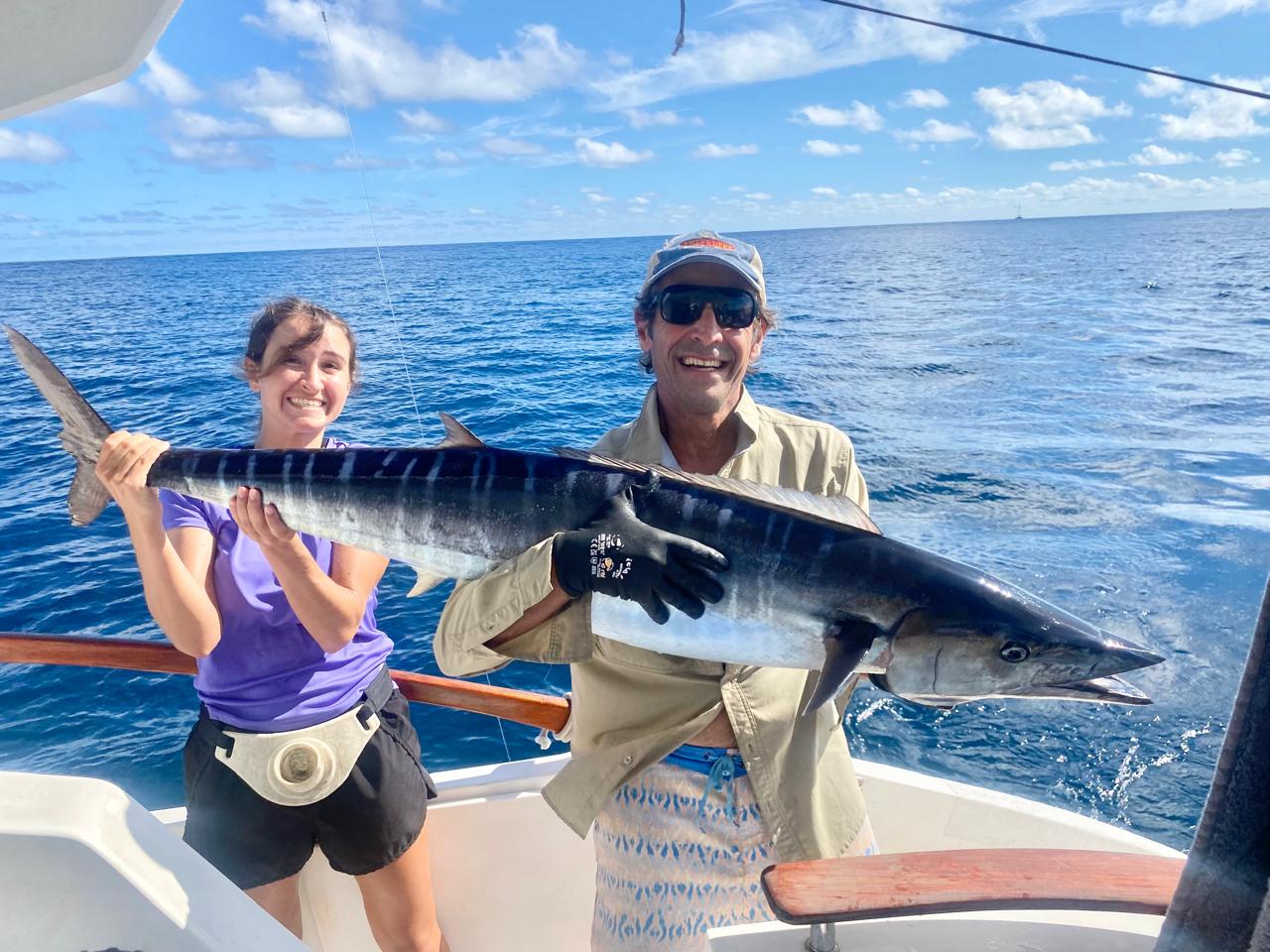
Two anglers reel in a large fish during a Seychelles fishing trip at sunset.
Environmental Conditions The final week of February put our technical patience to the test. After a week of relentless tropical rain and heavy overcast conditions, the barometric pressure remained low and unstable. We faced a pumping 1.5-knot current from the Northwest, which stirred up localized turbidity on the shallower banks of the Plateau. Sea temperatures hovered at 28°C, but the lack of consistent sunlight meant the pelagics weren’t “stacking” in their typical surface workups. For most of the run, we navigated moderate 1.5m to 2.0m swells and frequent squalls.
Catch & Activity
-
Yellowfin Tuna: 4 school-size fish landed. They were reluctant to commit to poppers, but we found success with 140mm sinking stickbaits on the edge of the current lines.
-
Sailfish: 1 small Sailfish (est. 20kg) released. It took a stickbait intended for tuna—a lucky crossover in an otherwise quiet window.
-
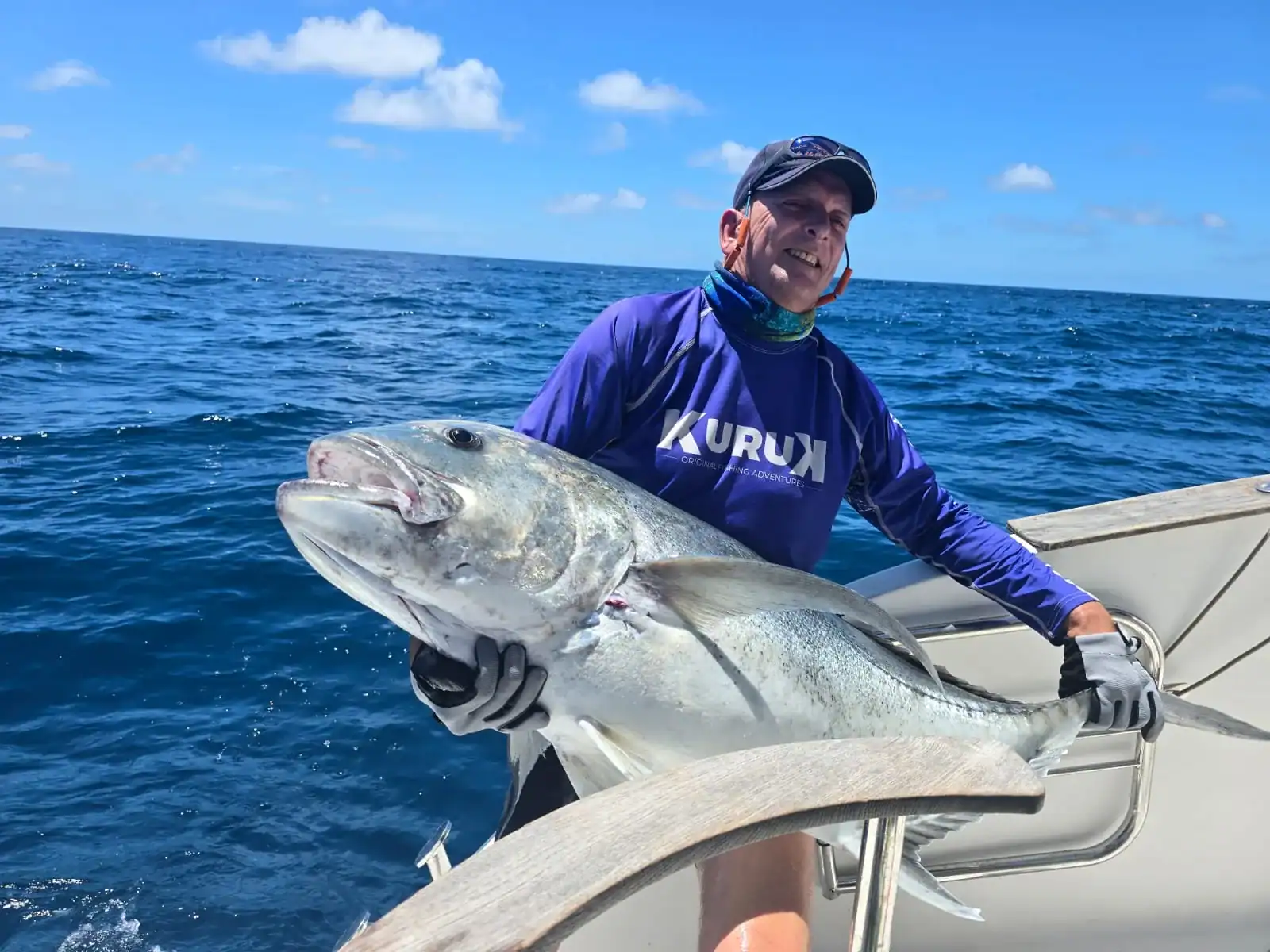
Dogtooth Tuna: Sighted multiple “heavyweights” following jigs at the 80m mark, but the bite was exceptionally finicky. We went 1 for 4 on the strikes we did trigger.
-
Reef Predators: The silver lining was the bottom action. We landed several solid Green Jobfish (Job gris) and Bohar Snappers during the midday tidal shifts.
The Mission: Ground Truth from the Water
Departing Eden Island Marina on the 23rd, we headed north toward the plateau edge. The “Identity Crisis” we often discuss regarding Seychelles weather was in full effect—glassy one hour, torrential the next.
The heavy rains from the previous week had introduced a lot of fresh water into the surface layer, which seemed to “ghost” the bigger fish. We worked the northern pinnacles relentlessly with vertical jigs, but the current was simply too aggressive for a natural presentation with standard 250g weights. We had to up-size to 400g jigs just to maintain contact with the bottom.
By the 26th, we saw a slight break in the clouds. This triggered a short 90-minute window where the Yellowfin began “mouching” on the surface. It wasn’t the “Visibility Explosion” we saw earlier in January, but it allowed our guests to at least get some line-peeling runs on light tackle.
Tackle & Techniques
-
Tactical Adjustment: Because the fish were so spooked by the low-light conditions, we dropped our leader sizes to 80lb fluorocarbon for the tuna. It was a risk, but the only way to get the bite.
-
Vertical Jigging: Silver and Glow-pattern jigs were mandatory. In the murky water, the high-reflectivity finish was the only thing the Dogtooth would track.
-
Topwater: Sinking stickbaits outperformed poppers 4-to-1. The fish simply didn’t want to break the surface chop to hit a loud cup-face lure.
Captain’s Insight Honest reporting matters: This was a “grind” of a trip. The February rain regulated the water temperature; additionally, it also made the fish lethargic. We are seeing a lot of bait on the sonar, which tells me that once this pressure system clears and the March transition begins, the bite is going to be violent.
For specialists joining us in the coming weeks, ensure your PR Knots are perfect. With the reluctant bite, you cannot afford a single gear failure when a trophy finally decides to commit.
Plan your next offshore run: 👉 View trips and availability
Leave A Comment