Giant Trevally (GT) Fishing in Seychelles:
Power, Precision, and Pure Aggression
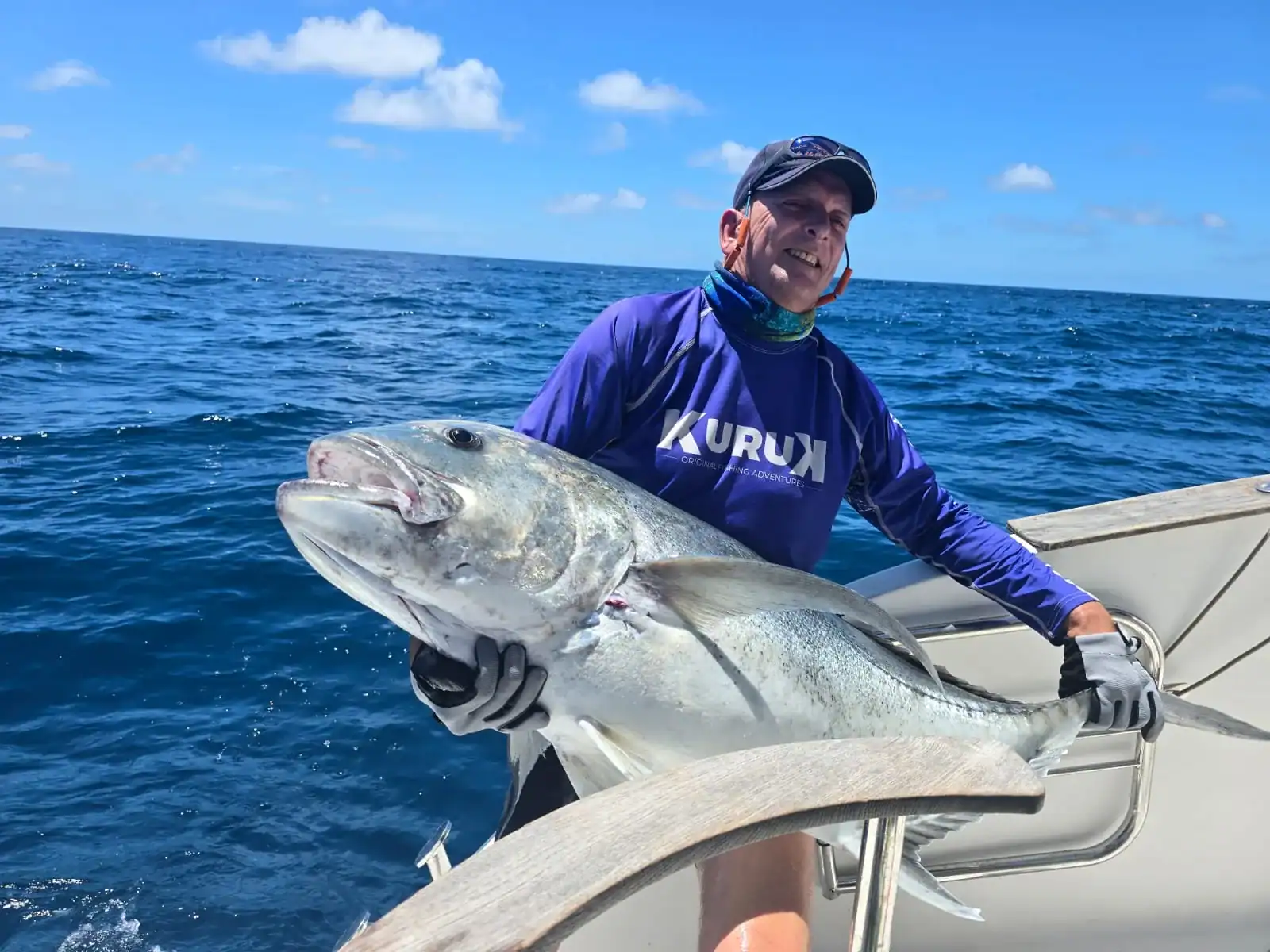
Few fish define saltwater sportfishing like Trevally. In the GT Popping in Seychelles Outer Islands, Trevally are not just present — they dominate. From shallow lagoon flats to violent reef edges and deep bommies, Trevally of multiple species hunt aggressively in some of the most pristine marine environments left on the planet.
While many destinations offer glimpses of Trevally fishing, the Outer Islands offer the full picture: size, numbers, variety, and behavior that hasn’t been dulled by pressure.
Trevally Species & Typical Sizes in Seychelles
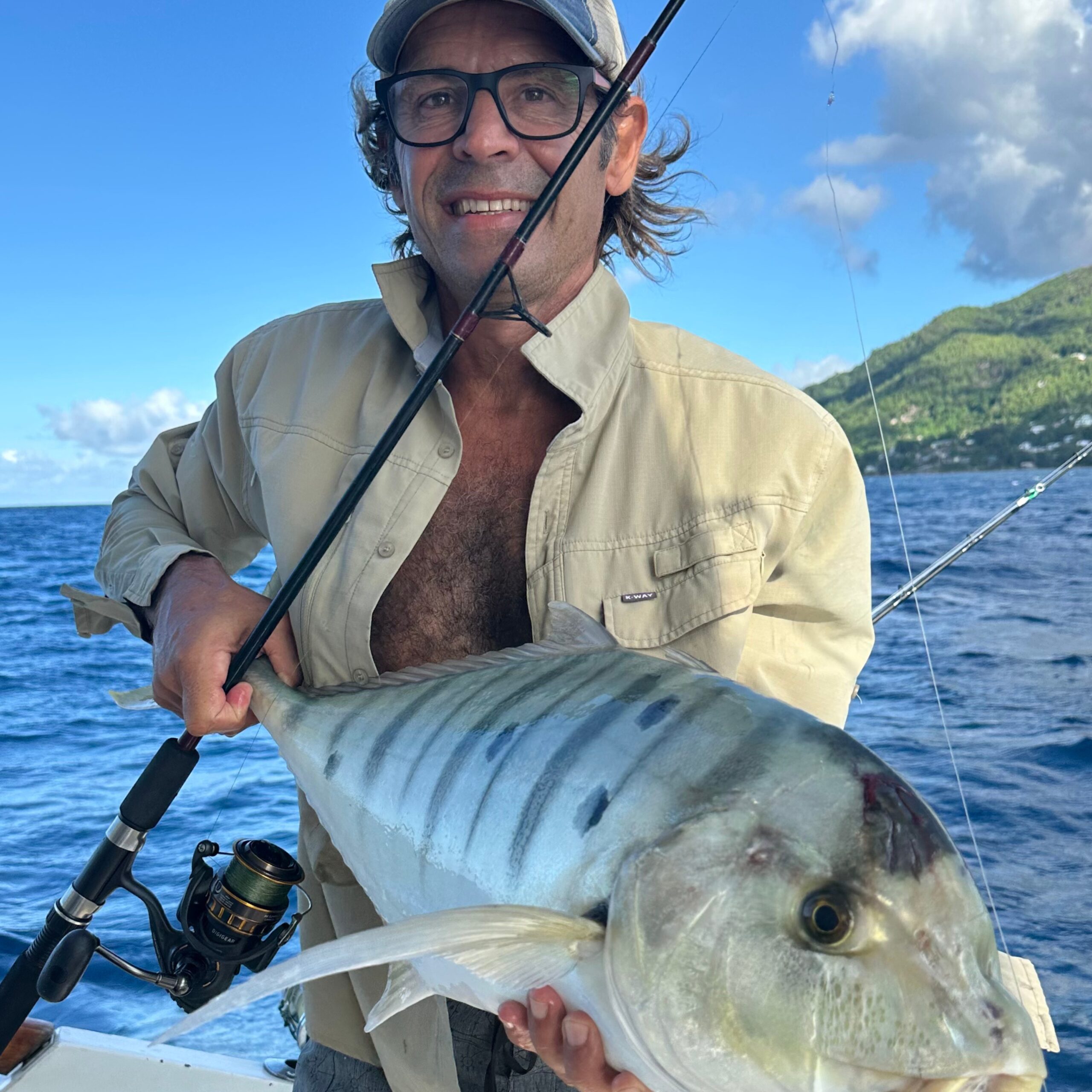
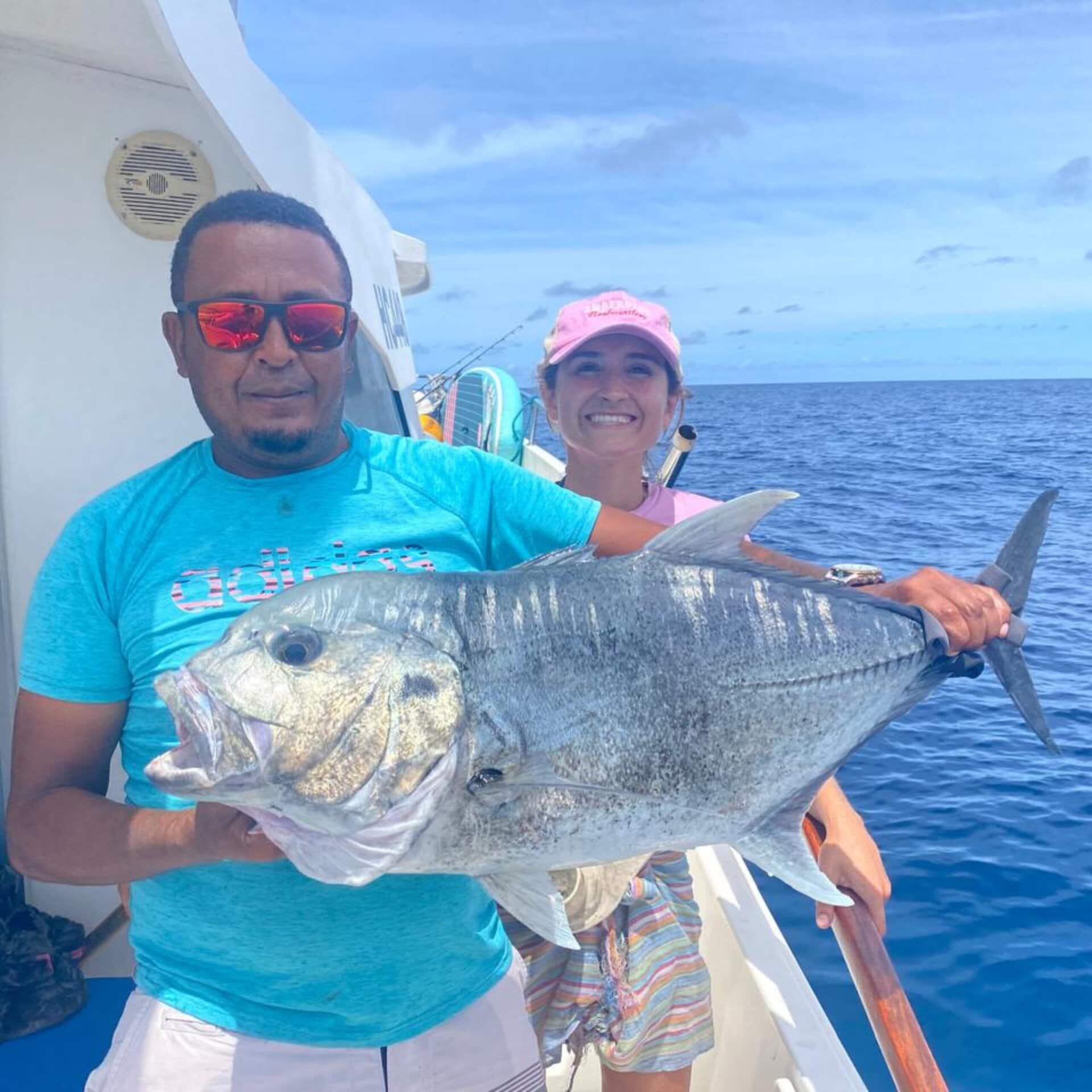
Giant Trevally (GT)
- The apex inshore predator of the Indian Ocean and the primary obsession for many anglers.
Common size: 10–25 kg
Outer Islands average: 25–40 kg
Large fish: 40–50+ kg
Outer Islands GTs are noticeably different — broader shoulders, heavier heads, and an explosive commitment to the strike that reflects minimal angling pressure and abundant bait.
Bluefin Trevally
- Fast, aggressive, and visually spectacular, especially over shallow reef.
- Typical size: 3–8 kg
- Bluefins are relentless attackers of surface lures and are often encountered in packs around reef edges and shallow structure.
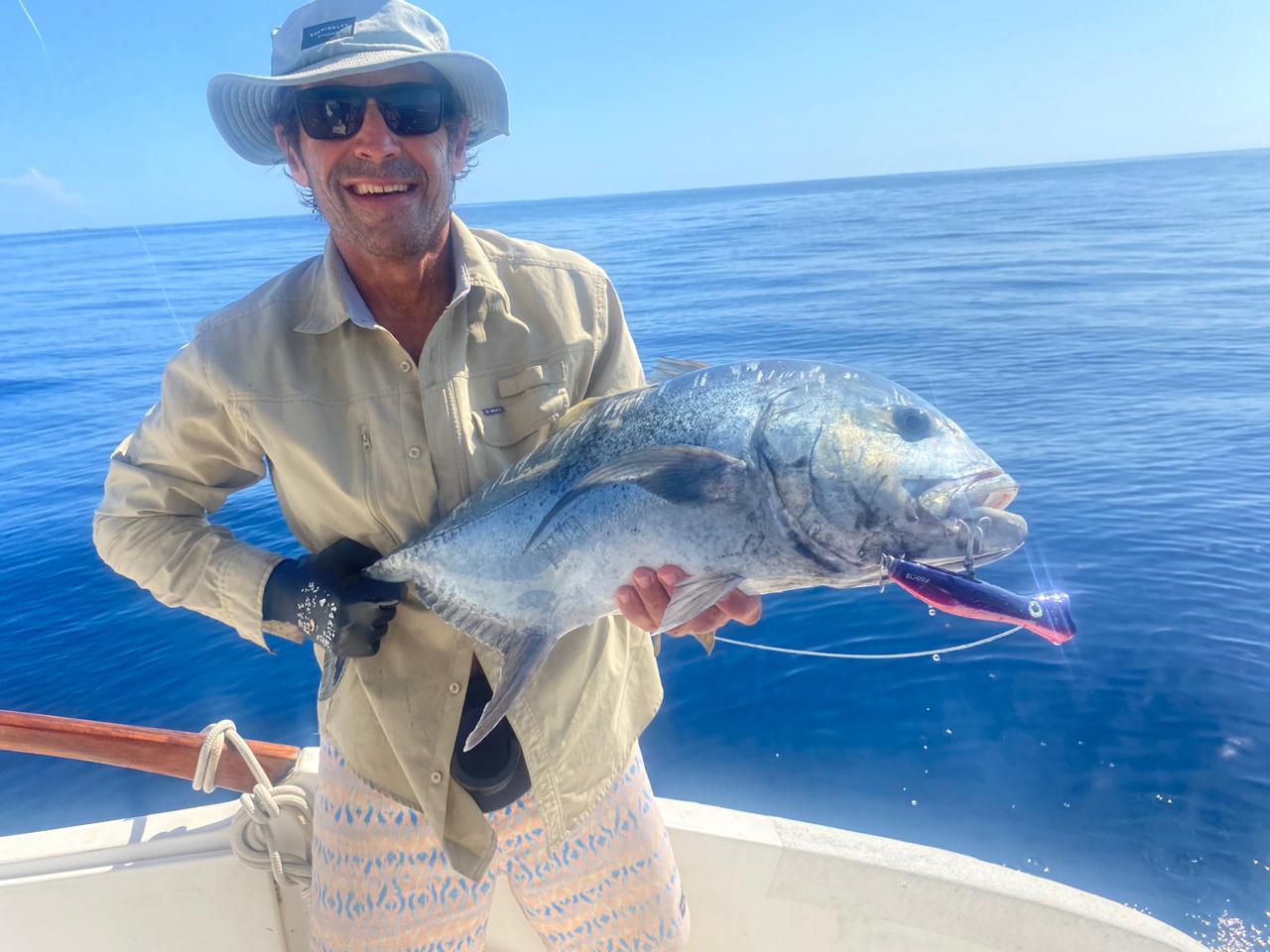
Bigeye Trevally
- Often overlooked until hooked — then immediately respected.
- Typical size: 5–15 kg
- Bigeye Trevally hit hard and fight deep, frequently appearing around drop-offs, channels, and current lines.
Proven Techniques for Trevally in the Outer Islands
Trevally fishing in Seychelles is not one-dimensional. Success comes from understanding where fish move with tide, current, and light, and choosing the right approach for each zone.
Popping (120–200 g)
- The classic GT method — and for good reason.
- Large-cup poppers displace water and trigger reaction strikes
- Best along whitewater edges, reef passes, and current-washed points
- Explosive surface takes are common, especially during tidal movement
- Heavy tackle and disciplined drag management are essential to keep fish clear of reef and structure.
Stickbaits (Floating & Sinking)
- Stickbaits account for a huge percentage of GT encounters, particularly when fish are cautious or feeding subsurface.
- Floating stickbaits excel in calm water and shallow reef edges
- Sinking stickbaits shine in current, deeper edges, and pressure zones
- Bluefin Trevally are especially prone to chasing fast-moving stickbaits
In the Outer Islands, it’s common to see GTs follow a lure multiple times before committing — staying patient often pays off.
Jigging Around Bommies & Drop-Offs
- Vertical jigging produces Trevally when surface activity slows.
- Effective for Bigeye Trevally and deeper-holding GTs
- Focus on isolated structure, steep edges, and current funnels
- Short, controlled jigging strokes often outperform aggressive pumping
- This technique is especially productive during slack water or mid-day lulls.
Flats Wading & Sight-Fishing
- One of the most demanding — and rewarding — ways to target Trevally.
- Wading shallow lagoons during the right tides
- Spotting cruising GTs, Bluefins, and Bigeyes
- Precise casting and minimal disturbance are critical
- Hookups in shallow water are brief, violent, and unforgiving — proper tackle and immediate pressure are essential.
Seasonality: When Trevally Fire Hardest
Trevally are present year-round in Seychelles, but activity levels and size trends shift with seasons and tides.
- Prime season: October – May
- Peak aggression: Around spring tides
- Large GT encounters: Often coincide with stronger tidal movement
- While GTs can be caught in all conditions, timing tides correctly often matters more than time of day.
Why the Outer Islands Are World-Class for Trevally
- The Outer Islands combine every habitat Trevally need — in close proximity and largely untouched.
- Reef passes funnel bait and current
- Whitewater edges provide ambush zones
- Lagoons offer shallow hunting grounds
- Deep drop-offs allow fish to stage and recover
- This variety allows Trevally to behave naturally, move freely, and feed aggressively. It’s one of the few places where you can encounter 40+ kg GTs in shallow water, within sight of coral and sand.
Typical Trevally Scenarios Offshore & Inshore
- Trevally encounters in the Outer Islands often unfold suddenly:
- A GT materializing behind a popper in whitewater
- Multiple Bluefins racing each other to a stickbait in knee-deep water
- A Bigeye Trevally slamming a jig mid-water column
- Large GTs pushing bait onto shallow reef edges during tide changes
- These moments demand readiness — loose drags, slow reactions, or poor positioning are punished quickly.
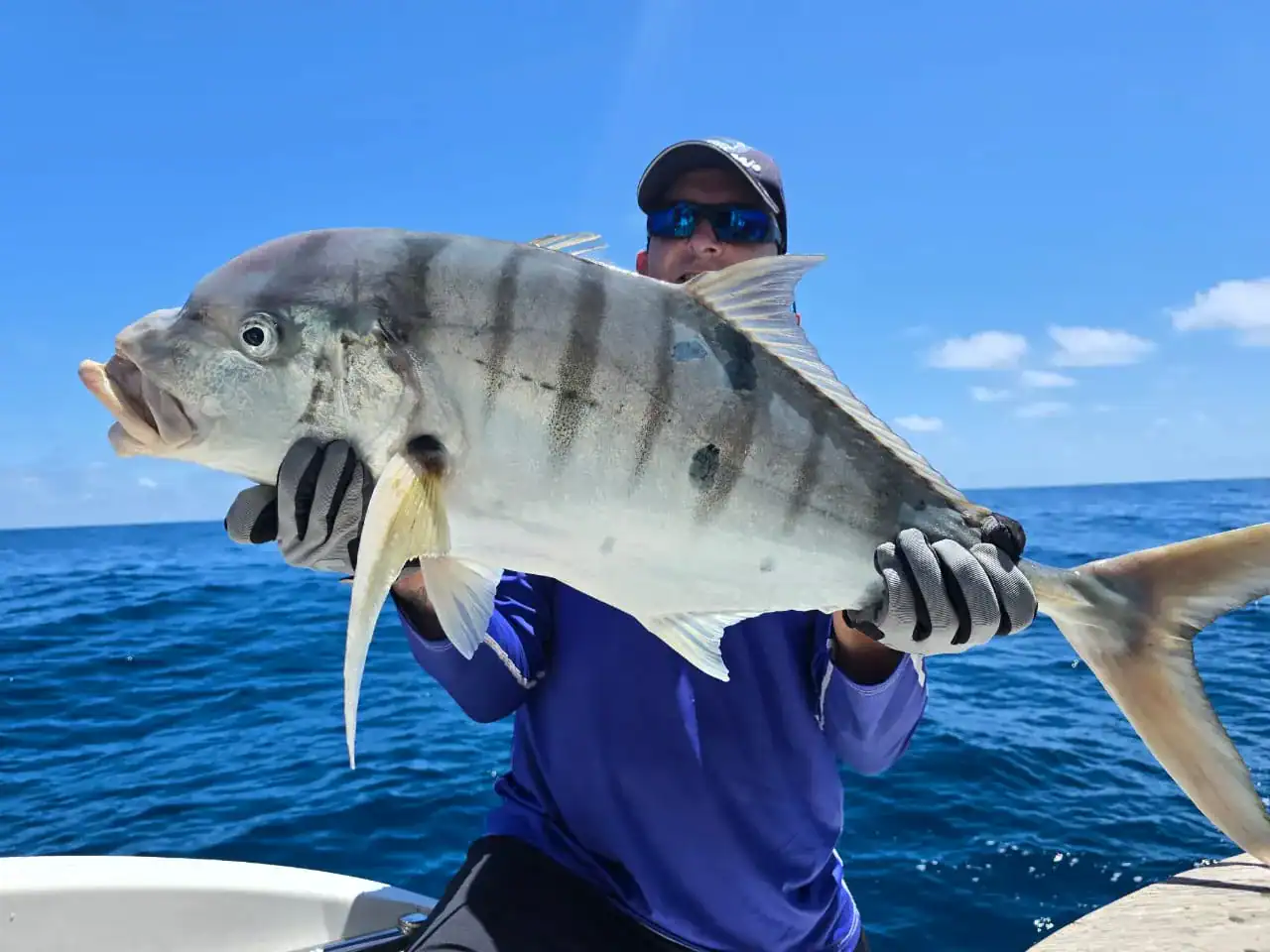
Example Trevally Catches from the Outer Islands
- 40+ kg Giant Trevally landed around bommies at St Joseph Atoll
- Bluefin Trevally smashing stickbaits along shallow reef flats
- Mixed Trevally species hooked in the same session as tuna and reef predators
Handling & Catch-and-Release Best Practices
Trevally are powerful fish that deserve careful handling.
Best practices include:
- Heavy enough tackle to shorten fight times
- Boat-side or shallow-water releases whenever possible
- Minimal time out of the water
- Strong support under the belly for photos
- Proper revival into the current
- Responsible handling ensures these fish remain aggressive, healthy, and available for future anglers.
Trevally as the Heart of Outer Islands Fishing
For many anglers, Trevally — especially GTs — define the Outer Islands experience. They represent raw power, speed, intelligence, and the thrill of fishing in untouched water.
In the Seychelles Outer Islands, Trevally are not a bonus species.
They are the reason many anglers travel halfway around the world.
👉 A Complete Angler’s Guide to Targets, Techniques & Seasons
Trevally Hunters: The Ultimate Outer Islands Mission